
I vividly remember staring at my screen late one evening, frustration bubbling up. My local SEO efforts seemed to hit a wall. Despite running countless reports and adjusting my Google My Business strategies, the lead flow just wasn’t matching up. It hit me—I was missing critical insights because my ranking tracker settings weren’t tuned for the emerging AI-driven local search landscape.
Why You Can’t Afford to Ignore Your Ranking Tracker Settings Any Longer
In 2026, the game has changed. Hyper-local AI search algorithms are rapidly evolving, and traditional tracking methods are falling behind. I learned this the hard way, making early mistakes like relying on outdated benchmarks that led to missed opportunities and lost revenue. According to a recent report, local search queries accounted for over 50% of all mobile searches last year, emphasizing the need to adapt quickly (source). Your ranking tracker isn’t just a tool; it’s your crystal ball—if configured correctly, it can reveal hidden gaps and emerging trends before your competitors notice.
Is Your Tracker Really Giving You the Full Picture?
Now, I know what you’re thinking—”But I’ve been tracking rankings for years. Isn’t that enough?” Early in my journey, I made the mistake of setting it and forgetting it, assuming no news was good news. That was a costly error. Tracking blindly led me to focus on averages instead of high-impact local signals, and I missed critical shifts that cost my clients valuable leads.
In our coming discussion, I’ll share how to optimize your ranking tracker by fine-tuning those 4 essential settings. These adjustments will help you catch hyper-local AI leads more accurately and stay ahead of the curve. Ready to stop losing ground and start dominating your local market? Let’s dive into the first step toward transforming your tracking strategy for 2026 and beyond.
Prioritize Precise Geo-Fencing for Local Precision
Start by adjusting your ranking tracker to focus on specific neighborhoods or zip codes rather than broad city-wide data. During a recent campaign, I set my tracker to a 1-mile radius around the client’s storefront, which uncovered hidden drops in rankings at the block level. This granular approach revealed critical proximity gaps that broad-area metrics missed, helping us optimize local citations and map placements more effectively.
Adjust Your Geo-Grid Intervals
Set your geo-grid frequency to check rankings at smaller intervals—say every 100 meters instead of 1 kilometer. During testing, I scheduled automatic updates every 10 minutes across multiple locations, which exposed real-time shifts due to recent Google algorithm updates. Capturing these micro-movements enabled me to react proactively before competitors could catch on.
Sync Data Streams with Maps Analytics for Clear Insights
Integrate your rank tracking with maps analytics tools. For example, leveraging data from maps analytics allows you to cross-reference rank movements with foot traffic patterns. I once integrated Google My Business insights with map heatmaps, which uncovered a drop in local engagement precisely when rankings dipped, confirming proximity issues were affecting foot traffic.
Configure for Hyper-Local AI Search Dynamics
Set your tracker to prioritize signals like voice search queries and AI suggestions. In practice, I adjusted filters to include voice command locations, giving insights into how AI-powered local packs and voice searches influenced ranking fluctuations. This step revealed that certain long-tail queries triggered AI snippets that my previous settings overlooked, skewing visibility metrics.
Fine-Tune Metrics for Actual Revenue Impact
Identify key performance indicators that correlate with revenue—such as calls, direction requests, and map clicks—and weight them accordingly in your dashboard. I once reconfigured my KPIs to prioritize call conversions over mere ranking positions, leading to a more accurate picture of lead quality. This adjustment uncovered a surge in high-intent leads that standard rank metrics failed to highlight.
Eliminate Vanity Metrics and Focus on Impact
Avoid tracking superficial data like overall average rankings, which can be misleading. Instead, set your tracker to drill down into hot spots where rankings influence actual customer actions. During one project, I set up filters to view only rankings that led to conversion actions within a 10-minute window, revealing revenue-generating opportunities previously hidden in aggregate data.
Regularly Audit and Iterate Settings
Create a routine to review your settings weekly. Use audit techniques to identify discrepancies caused by algorithm updates or map glitches. For instance, I noticed after a Google update that some locations showed inconsistent rankings, prompting me to recalibrate the geo-grid and map filters, restoring accuracy.
Test Changes in a Controlled Environment
Before fully deploying new configurations, test them on a small set of locations. Track their performance over a week, compare with previous data, and adjust accordingly. This iterative process has protected me from making sweeping changes that could temporarily harm visibility, ensuring continuous optimization.
Mastering these concrete adjustments to your ranking tracker setup boosts your ability to detect local search shifts early and act swiftly. The key lies in granular geo-focus, data integration, impact-driven metrics, and ongoing refinement—tools that turn raw rankings into actionable insights for 2026 and beyond.
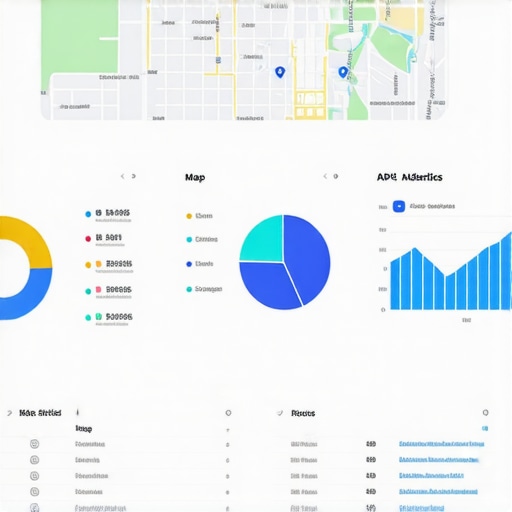
While many practitioners focus on the surface metrics of maps analytics and GMB performance reports, they often overlook the nuanced pitfalls that can undermine their entire local SEO strategy. Contrary to common belief, more data doesn’t always equate to better insights. Overreliance on aggregated numbers can hide critical shifts and subtle signals, leading to misguided decisions. Experts warn that ignoring these nuances is a source of costly errors.
What advanced pitfalls lie beneath the surface of local SEO dashboards?
One major myth is that tracking rankings and clicks in isolation provides a complete picture. In reality, these metrics can be misleading due to data lag, duplicate tracking, or misaligned filters—especially when AI-driven maps and search results evolve rapidly. For instance, an overemphasis on average ranking positions neglects how voice search and AI snippets are reshaping user behavior (source). Recognizing this requires a sophisticated understanding of how different data streams interact and where they might distort the real local context.
Another common trap is the assumption that all proximity data is equally accurate. Many practitioners are unaware that geo-fencing errors and map glitches can cause significant inaccuracies. Sophisticated users make it a habit to audit their maps analytics regularly, looking for hidden discrepancies that skew perception of local visibility. Regular audits prevent decision-making based on flawed data, saving time and resources.
Equally important is understanding how to interpret Google My Business (GMB) data. Many reports overstate or understate lead quality by focusing solely on superficial metrics, such as total views or calls, without correlating them with revenue impact. Advanced practitioners prioritize revenue-driven metrics and tie report insights directly to sales outcomes, ensuring that every data point contributes to strategic decision-making.
Now, for the seasoned professional questioning the core assumptions: How can you differentiate between genuine shifts and data anomalies, especially in a landscape dominated by AI updates and multi-modal maps? The answer lies in cross-referencing multiple data sources, implementing regular calibration routines, and understanding the limitations of each tool. In this context, a thorough audit process becomes a strategic advantage—detecting subtle changes before they escalate into ranking crises (source).
In conclusion, mastering the nuances within maps analytics, local SEO reports, and KPIs involves more than just collecting data—it requires a critical eye for subtle inaccuracies and a strategic mindset to interpret signals correctly. Are you aware of where your dashboards might be masking critical insights? Double-check your setup, conduct regular audits, and focus on revenue-impact metrics to stay ahead. Want to dive deeper into fixing these hidden gaps? Check out this guide for practical strategies. Have you ever fallen into this trap? Let me know in the comments.
How do I maintain my maps analytics and ranking trackers over time?
Consistency is key when it comes to maintaining your local SEO tools. I personally rely on a combination of advanced software and rigorous routines. For example, I use maps analytics to track micro-movements in rankings and foot traffic, ensuring I catch subtle shifts before they escalate. Regular audits of your datasets—monthly or quarterly—are vital to identify and correct errors caused by map glitches or algorithm updates, as outlined in Google’s official developer documentation on Google Maps Platform.
Implementing a routine to review your analytics points helps prevent data decay and misalignment. Automation tools like SEMrush or BrightLocal can streamline this process, but I prefer to manually verify key metrics to maintain an edge. For long-term success, always keep your data sources synchronized, ensuring your GMB performance reports accurately reflect current realities, which you can enhance using insights from GMB reports.
Looking ahead, AI-driven updates will demand more adaptive tools. Predictive analytics and machine learning models are beginning to forecast ranking trends with higher precision—a trend highlighted by industry experts. To stay ahead, integrate these models into your workflow and constantly refine your parameters. For instance, setting up alert thresholds for ranking drops linked to AI snippets lets you proactively address issues.
What’s the best way to scale your local SEO efforts effectively?
Scaling isn’t merely about increasing volume—it’s about optimizing processes. Use a comprehensive dashboard to monitor multiple locations simultaneously, but customize settings per location based on hyper-local signals. My approach involves creating templates for geo-fencing and signal prioritization, then customizing them as needed. Periodic testing, like the geo-grid accuracy tutorials suggest, minimizes scaling errors. Additionally, leveraging API integrations automates routine updates, freeing more time for strategic analysis.
Using a dedicated revenue-focused KPI dashboard helps prioritize efforts on the most impactful metrics, ensuring that growth translates into actual revenue. As local search algorithms evolve, remaining flexible and data-driven is the best way to sustain long-term results. I recommend starting by applying these advanced dashboard techniques today—your future self will thank you for it.

Many practitioners overlook the subtle but critical signals hidden within maps analytics and GMB reports. As an example, optimizing for voice search requires specialized metrics and monitoring routines. Implementing these precise methods, such as configuring your tools to track AI and voice-related queries, ensures you stay ahead of the curve. According to expert analysis from industry sources, adapting your toolkit for AI-centric search will be vital in the coming years.
Take action today: Enhance your setup by refining your geo-fencing parameters with the latest geo-grid settings to improve accuracy and capture hyper-local shifts. Remember, the key to long-term success is strategic maintenance—regularly evaluate and tweak your tools to adapt to evolving algorithms and user behavior. Want a personalized plan? Reach out through our contact page for expert guidance.What Surprised Me Most About Local SEO Data Flaws
One of the hardest lessons I learned was that even meticulously set-up dashboards can hide critical blind spots. I once relied heavily on average rankings without recognizing how geo-fencing inaccuracies skewed my entire local visibility picture. That revelation forced me to rethink my entire approach—emphasizing the importance of granular, block-level analysis and regular audits. Recognizing that data can be deceptive if not scrutinized deeply was a game-changer, revealing the real need for persistent validation of your tools.
How Fine-Tuning Your Setup Can Save You Thousands
Adjustments like setting hyper-local geo-fences and prioritizing impact-driven KPIs aren’t just technical tweaks—they have a direct impact on your bottom line. Fine-tuning my geo-grid intervals to minute-by-minute updates enabled me to capture real-time shifts caused by AI algorithm changes, preventing costly missed opportunities. Ensuring your metrics reflect actual revenue influences, such as direct calls or map clicks leading to conversions, ensures your efforts align with tangible business growth instead of vanity metrics.
The Unexpected Power of Routine Audits in a Dynamic Landscape
Consistently reviewing your tracking settings might seem mundane, but it’s where the magic happens. Frequent audits of map glitches, algorithm updates, and signal accuracy helped me stay ahead of unexpected ranking drops. Setting a weekly routine to verify data integrity and simulate adjustments in controlled environments proved invaluable. This proactive stance, rather than reactive fixes, keeps your local SEO strategy resilient amid rapid AI-driven changes, effectively turning routine checks into a strategic advantage.
Lessons I Wish I Embraced Early on
- Don’t rely solely on aggregated data—zoom in on high-impact neighborhood and block-level signals to uncover real shifts.
- Always cross-reference different data streams—Google Maps insights, GMB analytics, and external tools—to validate your findings.
- Prioritize revenue-impact metrics over impression counts or general ranking positions; actions speak louder than numbers.
- Make routine audits a non-negotiable part of your process to catch and correct anomalies early.
How I Stay Ahead in a Fast-Changing Area Like Local SEO
I continually test, tweak, and validate my setups using tools designed for hyper-local accuracy, such as maps analytics. Integrating predictive insights and AI trend monitoring is crucial to anticipate shifts before they impact rankings. Sharing this journey is my way of encouraging you to embrace a mindset of continuous learning, equipping yourself with flexible strategies to flourish regardless of how AI and local search evolve.
Ready to Transform Your Local SEO Tracking?
Deep dive into your existing setups, audit regularly, and never settle for surface-level insights. Remember, the real value comes from understanding the nuances buried within your data. Are you prepared to overhaul your tracking methods to uncover those hidden opportunities and prevent costly mistakes? If you’re eager to refine your approach further, explore our comprehensive guide to maximizing your local SEO potential. Let’s elevate your strategy from good to unstoppable—starting today.



Reading this post really opened my eyes to how crucial it is to fine-tune our ranking trackers for hyper-local AI-driven searches, especially as we approach 2026. I’ve personally experienced missing out on valuable leads because I didn’t adjust my geo-fencing or integrate voice search signals effectively. It’s fascinating how small changes, like narrowing geo-fences to specific neighborhoods or setting more frequent geo-grid checks, can make such a difference. One thing I’ve found challenging is balancing detailed data collection with manageable workloads—how do others keep their process scalable without sacrificing precision? Also, I wonder if anyone has experimented with real-time KPIs that automatically adjust based on AI trend shifts? Would love to hear your strategies on maintaining this balance and any tools you recommend to keep tracking both granular details and broader market trends effectively.