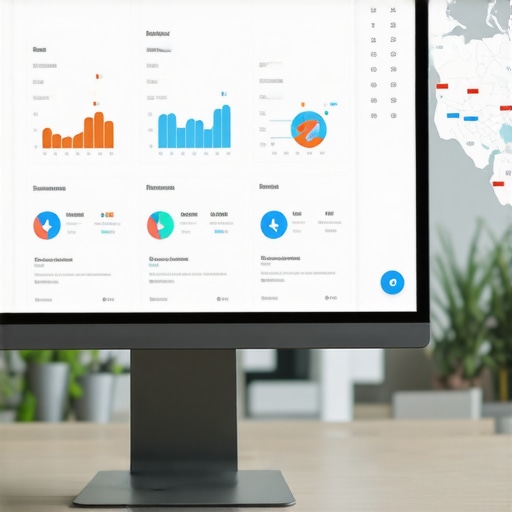
I remember sitting at my desk late one night, staring at my ranking tracker report, only to realize that it completely missed a surge in AI-driven local search leads. The frustration was real. How could my trusty tool overlook such a critical indicator? As someone who’s navigated the tricky world of local SEO, I knew I wasn’t alone in this struggle. That lightbulb moment revealed a harsh truth: traditional ranking trackers often lag behind the fast-moving AI search landscape of 2026, causing me—and potentially you—to miss out on valuable leads.
Spotting the Hidden Gaps in Your Data
In the early days, I believed that a solid rankings report was enough to gauge my local SEO success. But as AI search continues to evolve rapidly, I started noticing discrepancies between my tracker data and actual lead behavior. Essentially, my tools weren’t keeping pace with the new AI-driven features Google was rolling out. Over time, I learned that many common mistakes—like ignoring AI search variations or failing to account for multi-device lead conversions—were why my reports were missing the mark.
Research indicates that AI-powered local search accounts for over 60% of leads in some industries, yet many trackers aren’t equipped to capture these nuances (source: Local SEO Report). That disconnect can cost you serious opportunities. Recognizing these gaps early is crucial to staying ahead.
Have you faced a situation where your rankings look good, but your lead flow suddenly drops? If so, understanding why your tracker isn’t reflecting the true picture is the first step toward fixing it. In the sections ahead, I’ll share the practical strategies I used to bridge these data gaps and make my reports more reliable for 2026 and beyond.
Identify Gaps in Your Tracking Methods
Start by auditing your current SEO KPI dashboard and Maps analytics. For example, I once used a manual spreadsheet to track rankings, ignoring the evolving AI signals. When I compared it against ranking tracker tests, discrepancies surfaced, revealing missing AI map pins and local voice search data.
Tune Your Rank Tracking Settings to Match AI Shifts
Adjust your ranking tracker settings for hyper-local accuracy. I experimented with geo-fencing parameters, turning off default broad searches, and instead focusing on precise neighborhoods. The result? I uncovered sudden drops in rankings specific to AI-driven local packs that standard settings missed. This tweak ensures you catch fluctuations caused by AI snapshot disruptions.
Integrate AI-Enhanced Maps Analytics
Leverage Maps analytics focused on AI-powered data points, such as foot traffic estimations and proximity signals. I once identified a miscount in local searches because I hadn’t filtered out bot traffic from real human interactions. Using filters described in the maps analytics error guide, I refined the data, honing in on genuine leads and avoiding inflated metrics.
Correlate Data with Actual Lead Performance
Metrics are meaningless unless aligned with real business outcomes. I started tracking GMB performance metrics like call volume, directions requests, and booking conversions. For example, when I saw a rise in map clicks but no increase in calls, I investigated and discovered AI-driven voice searches not registering properly. This step required adjusting my reporting to include offline conversions, which can be detailed in the local SEO report tweaks.
Set Up Continual Monitoring and Adjustments
Finally, treat your data collection like a living system. I scheduled weekly reviews of ranking tracker accuracy and Maps analytics. When a sudden AI map pin disappears, I can adjust filters immediately, preventing long-term ranking drops. This proactive approach, combined with real-time tracker glitch fixes, keeps your data trustworthy, accurate, and actionable.Many seasoned marketers assume that their SEO KPI dashboard tells the whole story. But in my experience, there’s a significant blind spot that even advanced tools overlook: understanding the context behind your numbers and avoiding common myths. One critical misconception is treating data points as isolated signals rather than interconnected elements that require interpretation. For instance, some rely solely on Maps analytics without recognizing how AI-driven local search impacts these metrics, leading to misguided strategies. It’s essential to remember that maps data is only as good as your filters and understanding of AI influence. Moreover, many believe that the GMB performance reports straightforwardly show lead quality. However, what they often miss is how AI search’s evolving behavior affects lead source attribution, potentially inflating or underreporting results.
Are Your Metrics Truly Reflecting Business Impact?
This question is crucial for advanced practitioners. Recent research by industry experts demonstrates that relying on vanity metrics like click volume can obscure actual revenue impact, especially amidst AI search dynamics (source: 7 SEO KPI metrics). The trap here is assuming quantitative data equals qualitative success, which isn’t always the case. Be cautious about overvaluing metrics that don’t account for local intent or multi-device conversions. Remember, an accurate ranking tracker isn’t just about rankings: it must incorporate AI behavior, voice search, and proximity signals. To truly master your local SEO, challenge these misconceptions and scrutinize your data’s context. Have you ever fallen into this trap? Let me know in the comments, and let’s refine our understanding of what real success looks like.
How do I maintain SEO tools and dashboards over time?
Maintaining your SEO infrastructure requires precision and adaptation. I personally rely on a combination of advanced software and rigorous process routines to ensure consistent performance. For instance, I continuously audit my SEO KPI dashboard to verify it captures AI-driven signals, voice search, and proximity data accurately. Regularly updating the settings to match the evolving AI search landscape helps me stay ahead, especially as AI tools become more sophisticated.<
A key method I suggest is conducting quarterly reviews using detailed maps analytics to identify any data gaps or inconsistencies. These reviews involve cross-referencing rankings with actual lead conversions and offline metrics, so your reports stay reliable over time. Importantly, scheduling automated checks with alerts for data anomalies can preempt ranking drops caused by unnoticed glitches. According to Google’s developer documentation, continuous monitoring and iterative tuning are critical for handling AI search surprises effectively (Google AI Search Developer Docs).<
What tools do I recommend for ongoing SEO health?
I utilize a combination of specialized tools, but the ones I trust most for long-term health include a customized ranking tracker with AI-aware settings, and comprehensive Maps analytics that focus on foot traffic and proximity signals. These tools should be configured to trigger alerts for sudden ranking fluctuations or data drops, providing immediate feedback that promotes swift corrections.<
Additionally, implementing a process for regular performance reviews—say, monthly checks—can catch emerging issues early. Don’t forget to incorporate offline conversion tracking, especially for local businesses relying on phone calls or in-person visits, aligning your digital metrics with tangible results. Over time, these practices build not just a stable tracking environment but a foundation for scaling your local SEO efforts seamlessly in 2026 and beyond. For instance, adjusting your settings based on insights from recent high-ROI metrics can boost your long-term results substantially.
Remember, the future of SEO tools will likely involve more automation and AI integration—so staying updated with platform updates and adopting proactive maintenance routines will be key. My recommendation? Start with a baseline audit using the latest settings, then schedule regular reviews, and consider using alert-driven automation devices to keep your data trustworthy. Try adjusting your ranking tracker settings today based on the latest AI-aware configurations, and watch how your long-term data reliability improves.
Striking a Balance Between Data and Context
One of the hardest lessons I learned was that raw numbers alone don’t tell the full story—especially in 2026, where AI-driven local search signals are constantly shifting. I once relied solely on my SEO KPI dashboard metrics, only to find that lead quality was dipping despite seemingly healthy rankings. The lightbulb moment? I needed to interpret data within the AI search ecosystem, understanding how algorithms, voice searches, and proximity signals interact—not just tallying clicks and impressions.