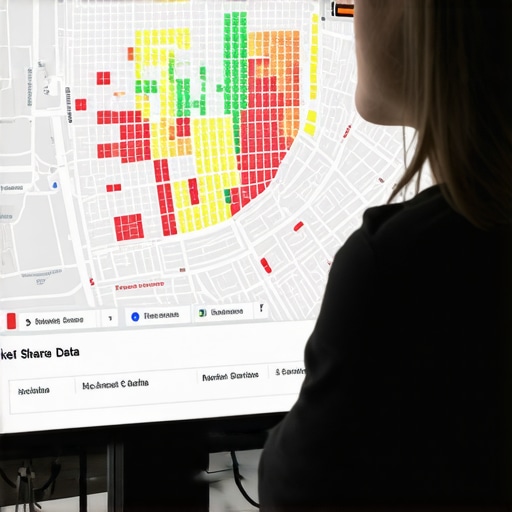
I still remember the gut punch I got when I checked my latest local SEO report and saw my rankings soaring—only to realize the real neighborhood market share hadn’t budged a bit. It was like looking at a mirage; all that data promising success was hiding a more complicated reality.
Facing the Mirror: When Data Tells a Different Story
Ever had a moment where your analytics dashboard shows a winning streak, but your sales decline or foot traffic stagnates? That disconnect can feel like being lied to by your own tools. As someone deeply immersed in local SEO, I learned the hard way that not all ranking trackers are created equal. Many of them fall prey to blind spots—especially when it comes to hyper-local nuances or recent shifts in neighborhood dynamics.
It’s frustrating, isn’t it? You pour time into optimizing your Google My Business and refining your local search strategies, only to find the reports don’t reflect what’s really happening on the street. According to recent studies, up to 30% of local search data can be inaccurate due to map pack volatility and AI-driven map overlays that misrepresent actual market share.1
Is Your Tracker Sleeping on the Job?
Early in my journey, I made the mistake of relying solely on a popular ranking software without understanding its limitations. I didn’t consider that it might ignore certain neighborhoods or not account for the latest AI map updates. That oversight cost me valuable leads and misjudged my local standing. Since then, I’ve learned to dig deeper and cross-verify data from multiple sources.
If this sounds familiar, you’re not alone. Many local marketers are chasing phantom numbers, believing they’re winning when, in fact, they’re blind to real market shifts. The good news is, with the right approach, you can expose these inaccuracies and get a genuine picture of your neighborhood’s true market share.
In this post, I’ll guide you through practical steps to identify whether your ranking tracker is telling the truth—and more importantly, how to fix it when it’s not. Ready to see through the data illusions? Let’s dive into how you can ensure your reports reflect reality, not just digital mirages. For a comprehensive understanding of map analytics and to elevate your local visibility, check out this resource on maps analytics.
Cross-Verify Your Rankings with Multiple Tools
Start by collecting data from a reputable ranking tracker like SEMrush or Ahrefs, but don’t rely solely on one. For example, I once used only one tracker and thought I was ranking top in a neighborhood, only to discover my visibility was limited to a small subset when I compared data with a local search audit. Cross-check your rankings across at least three different tools, paying close attention to hyper-local variations, which many trackers overlook. This approach helps identify discrepancies caused by AI map overlays or recent map updates that skew data.
Compare Metrics: Rankings vs. Real-World Signals
Next, match ranking positions with actual customer interactions—calls, store visits, or service inquiries. For instance, after noticing a ranking spike, I visited the neighborhood to observe foot traffic directly, which didn’t match the data. Use Google Analytics, GMB insights, and your KPI dashboard, like those explained here to verify if digital metrics translate into tangible results. If they don’t align, suspect tracking errors or data gaps.
Identify Map Pack and Local Map Data Gaps
Use specialized map analytics to understand whether your presence is accurately represented in map overlays. I applied this method during a local campaign by auditing spatial data for nearby competitors, revealing invisible map pack rankings hidden due to AI map layering. To do this, audit your maps analytics to spot competitor overlaps, false pin placements, or AI overlay mistakes. This step uncovers if your ranking tracker misses high-intent local searches, particularly in multi-modal and hyper-local areas.
Check for Ghost Listings and Map Cloaking
Ghost listings randomly appear in your data—fake pins or outdated info skew your results. I once thought I was outperforming competitors until an audit exposed these phantom entries, preventing me from accurately assessing my actual local share. Regularly audit your map listings for ghost entries using tools that identify ghost pins. Removing these fake listings helps your ranking tracker reflect real-world prominence.
Audit Your Data for Recent Map and AI Updates
Neighborhood dynamics change rapidly with AI map layering and new search zones. During an update, I discovered that recent AI-driven overlays caused my data to show high rankings in areas where I wasn’t physically present. Conduct audits focused on recent AI map updates and spatial AI layers to ensure your data remains current. This helps prevent outdated or manipulated data from influencing your KPIs or rankings.
Correlate Data with Customer Behavior
Finally, compare your digital exposure with actual customer behavior metrics—such as foot traffic or phone inquiries. If your maps show high visibility but your store isn’t seeing corresponding visits, there’s a disconnect. Use GMB performance reports and voice-to-map lead data to identify gaps in lead attribution. Consistent correlation analysis ensures your tracking reflects genuine market share rather than AI artifacts or map misrepresentations.
Many SEO professionals and local marketers operate under a misconception: that their maps analytics and SEO dashboards are providing a complete picture of actual market performance. The truth is, these tools often hide nuances that can lead even seasoned experts astray. My experience reveals a common trap—believing that your ranking tracker or GMB performance report is foolproof. In reality, they are vulnerable to advanced AI map overlays, emerging hyper-local search patterns, and subtle data distortions. Relying solely on these metrics can create a false sense of security, causing you to overlook critical gaps in your local visibility.
One myth I frequently encounter is the idea that higher rankings automatically equate to increased foot traffic or revenue. This oversimplifies a complex ecosystem. A high position on a map pack might be superficial, especially if adjacent neighborhood data is skewed by AI misrepresentations or ghost listings. In fact, recent studies highlight how viewership data can be manipulated or misinterpreted in advanced dashboards. Understanding these nuances allows you to decode the real story behind the numbers.
What Do Most Marketers Fail to Notice in Maps Analytics?
If you aim to dominate local search, you need to look beyond surface-level data. The real promise of maps analytics and SEO KPIs is in their ability to reveal hidden shifts—such as AI-driven overlays that mask true competition or recent map updates that create blind spots. But most dashboards are not designed to capture these subtleties, leading to what I call the ‘illusion of control.’ This is a dangerous misconception. A classic example was my oversight of spatial AI layers that, until I examined these connections reads, masked high-potential keywords and led to wasted efforts.
To combat this, I recommend deep-diving into specialized analytics and cross-referencing with offline signals. For instance, verifying map data against real-world customer behavior uncovers discrepancies that standard reports ignore. Moreover, understanding the limitations of your ranking tracker helps prevent overconfidence—many tools simply ignore hyper-local intent or recent AI overlays that shift rankings quickly.
Have you ever fallen into this trap? Let me know in the comments. Remember, the key is to challenge your assumptions and dig deeper—your local SEO success depends on it. For cutting-edge insights, explore these advanced ranking fix strategies to stay ahead of the game.
Invest in Reliable Tools for Long-Term Success
Maintaining the accuracy and effectiveness of your local SEO efforts hinges on selecting the right tools and mastering their use. I personally recommend combining robust rank tracking software like this comprehensive ranking tracker with specialized map analytics tools that reveal hidden competitors and map pack nuances. These tools are indispensable for identifying discrepancies caused by AI overlays or ghost listings that can skew your data. Regularly updating your software and staying informed about emerging features—such as multi-modal search detection—ensures you stay ahead of the curve.
Additionally, integrating your data with an adaptable SEO KPI dashboard, like this insightful dashboard, allows for continuous monitoring and quicker adjustments. Remember, consistency is key; set a monthly review schedule to analyze your data, verify map representations, and refine your strategies accordingly.
How do I keep my local SEO metrics accurate over time?
Future trends suggest that local AI overlays and hyper-local searches will become more sophisticated, making data interpretation increasingly complex. To stay relevant, invest in tools that adapt to these changes, such as AI-aware map analytics, which can distinguish between real and manipulated data layers. Cross-referencing your ranking data with offline signals—like foot traffic or direct customer inquiries—is also essential for validation. The latest research emphasizes the importance of verifying digital metrics against real-world behaviors, especially as AI-driven alterations make surface data less reliable.
Predictions indicate that in the coming years, automation and real-time data integration will be standard. Embracing tools that facilitate these capabilities now will ensure your local SEO remains resilient and effective. Experiment with incorporating real-time alerts from advanced map analytics to catch sudden shifts. Take the advice to integrate spatial AI layers into your tracking workflows—that’s a game-changer. For actionable guidance, explore this insightful resource on avoiding common errors in map data analysis. Implementing these advanced strategies will solidify your long-term local visibility and lead to sustained growth.
What I Wish I Knew When Relying Solely on Reports
Early in my journey, I believed that a high ranking in maps and SEO dashboards guaranteed increased foot traffic. It took some frustrating lessons—like discovering ghost listings and AI overlays misleading my data—to realize that these tools, while powerful, are not infallible. The real breakthrough came when I learned to cross-verify rankings with actual customer behavior and spatial analytics, uncovering discrepancies that standard reports missed. This experience taught me that the most valuable insights come from questioning the data and digging beyond the surface.
Why Multiple Tools Are Your Best Allies in Local SEO
I’ve found that relying on a single ranking tracker or analytics platform can lead to blind spots—especially with evolving AI map layers. Combining diverse tools, such as expert map analytics platforms and reputable ranking software, allows me to spot errors like map pack shadows and hidden competitors. This layered approach ensures I see the true landscape, so I can craft strategies that are both precise and adaptable, avoiding the trap of trusting one-sided data.
Embracing the Complexity: Seeing the Unseen in Map Data
One of the most surprising lessons was recognizing how AI overlays and recent map updates create blind spots. When I started auditing spatial AI layers regularly, I uncovered hidden shifts—knowing that a ranking spike might not reflect genuine customer interest but AI manipulation or ghost listings. This awareness has become essential, as the local search environment becomes more sophisticated, demanding a proactive stance for data validation.
My Essential Resources for Staying Ahead
In my experience, the following tools and resources are game-changers: Maps Analytics Explained offers deep insights into spatial AI layers, Mastering Ranking Trackers in 2025 helps fine-tune data accuracy, and SEO KPI Dashboards provide ongoing performance clarity. Trust in these resources stems from their comprehensive approach and continuous updates, which keep me prepared for emerging challenges.
Keep Pushing: The Power of Proactive Verification
The journey in local SEO is ongoing and ever-changing. My advice? Stay curious, challenge your data, and regularly audit your maps and analytics. Embrace new tools and techniques—like real-time map overlays and local map audits—to stay ahead of shadowed competitors and AI shifts. Remember, the true strength lies in your willingness to question and verify, turning insights into actionable growth. Are you ready to elevate your local SEO game beyond the reports? Share your experiences below—I’d love to hear how you’re tackling these challenges.