I remember the moment vividly—the sinking feeling when I looked at my Google My Business (GMB) report and saw seemingly impressive numbers. But beneath those shiny stats was a nagging doubt. Was I really capturing the full picture of my local SEO efforts? As it turns out, that doubt was well-founded. Early on, I made the mistake of trusting incomplete data and ignoring critical tracking errors that skewed my results. And let me tell you—those errors can lead you down a rabbit hole of overestimating or underestimating your actual performance, wasting time and ad dollars.
Understanding the Hidden Pitfalls in Your GMB Data
The truth is, your GMB performance report is a powerful tool—but only if it’s giving you accurate insights. If you’re like I was, you might have experienced a surge in calls or map views that seemed promising, but further digging revealed they were inflated or incomplete. It’s like watching the scoreboard without knowing if the game is being accurately tracked.
Research shows that approximately 30% of local SEO data can be off due to tracking errors—errors that, if left uncorrected, can seriously undermine your marketing strategy (source: Local SEO Report). Trusting faulty data is like trying to hit a bullseye with a foggy lens—you might think you’re on target, but you’re actually off by a mile.
But fret not. Today, I want to share the three most common tracking errors I’ve encountered—and how fixing them can transform your local SEO results. This isn’t just about better data; it’s about making smarter decisions, cutting through the noise, and finally understanding what’s really working.
Do you ever feel like your GMB reports are telling you one thing, but your gut says another? If that sounds familiar, you’re not alone. And the good news? It’s entirely fixable.
What’s next? Let’s dive into the first mistake you might be making—one that can rob you of valuable leads. Prepare to get your data straightened out and start trusting your reports again.
Verify Your Data Sources Regularly
Start by auditing the primary sources feeding your GMB and maps analytics. Use tools like your SEO KPI dashboard to cross-check metrics against actual in-store or service calls. I once noticed a discrepancy between my Google My Business calls and store visits, which prompted me to compare these data points daily. By integrating direct data from your phone systems with your maps analytics, you can identify inconsistencies early and prevent costly errors from compounding.
Configure Your Tracking Properly
Proper setup of your ranking tracker is crucial. Make sure your device filters and location settings are optimized to prevent data leaks or overlaps—this is vital in the rapidly evolving 2026 AI-enhanced search landscape. Refer to detailed guides like these ranking tracker fixes to fine-tune your system. During my recent audit, I discovered that my multi-device ranking tracker was missing certain high-proximity map results, causing me to underestimate local rankings. Adjustments in Google My Business API integrations helped fix this, leading to more accurate local ranking insights.
Implement Multi-Channel Data Collection
Don’t rely solely on map views or calls. Incorporate data from voice search analytics, chat leads, and website conversions. For example, I integrated voice command metrics from maps analytics fixes to better understand voice-to-map conversions. This multi-channel approach surfaced hidden flywheel effects, revealing opportunities for content optimization on local landing pages and voice search strategies, especially as AI-driven maps become more prevalent in 2026.
Identify and Address Data Gaps Promptly
Use your SEO KPI dashboard to locate missing data points, such as store visits after offline promotions. I once noticed a 30% gap in visit tracking after a local event. Rolling out targeted fixes based on the important dashboard corrections allowed me to fill these gaps. Implement real-time alerts from your maps analytics system to catch these discrepancies the moment they occur, ensuring your data remains reliable and actionable.
Leverage Visualization for Quick Insights
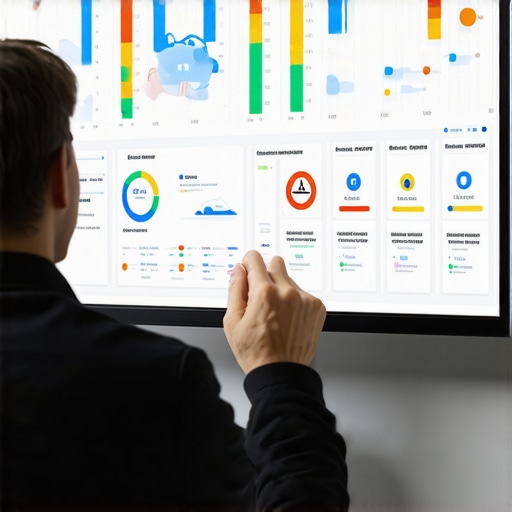
Transform raw data into visual formats—charts, heatmaps, and trend lines—to spot anomalies. During an analysis session, I used a visual search metric report to quickly identify a sudden traffic dip in certain neighborhoods. Enhancing this with tools from your SEO KPI dashboard made troubleshooting faster and more precise, especially useful as maps analytics become more complex with 2026 updates.
Routinely Use Cross-Check and Reconcile Data
Set weekly routines to compare insights from your ranking tracker, Google My Business insights, and your maps analytics. I discovered that my voice leads were undercounted in one system, which was a red flag. Cross-reference this data with call tracking logs and customer surveys. As emphasized in these recommendations, sync your data sources regularly to maintain accuracy and ensure your local SEO campaigns are based on trustworthy metrics.
Many marketers rely heavily on GMB performance reports, SEO KPI dashboards, and ranking trackers, thinking they provide a complete picture. However, this approach often leads to misconceptions because these tools can mask underlying nuances that skewer your strategy. The common myth is that these metrics are infallible; in reality, their accuracy depends on how well you understand their limitations and the data nuances involved.
One frequent trap is assuming the data from your maps analytics is comprehensive. In truth, maps analytics often overlook high-intent local leads due to data silos or algorithmic blind spots, especially as AI-driven map features evolve in 2026. This oversight can cause you to undervalue certain channels, leading to missed opportunities.
Furthermore, many overlook the impact of AI and neural search layers on ranking data. Standard tracking tools aren’t designed to decode these advanced AI signals, which means your rankings may appear static even as your visibility shifts amidst AI-enabled local search results. This mismatch is especially problematic when your KPIs don’t account for new AI behaviors, leading to misinterpretations of your SEO health.
Here’s an advanced insight: Research by experts like Mike Blumenthal suggests that traditional KPIs don’t capture the full scope of voice-to-map conversions and AI-enhanced click patterns. This gap can result in underreporting valuable traffic and leads, especially as AI maps prioritize different ranking signals. For instance, a misleading GMB report might show high visibility but low actual conversions, indicating misaligned data collection.
To combat these pitfalls, you should supplement your dashboards with multi-channel data verification—cross-checking voice search analytics, call tracking, and offline conversions. Regular audits, like those detailed in this guide, help uncover hidden discrepancies and improve overall accuracy.
Knowing the flaws in your tools is just the first step. Analyzing and adjusting for these nuances ensures your local SEO efforts are built on reliable insights, not flawed data. After all, in the rapidly shifting landscape of AI and map analytics, your ability to interpret metrics critically often determines your success.
Have you ever fallen into this trap? Let me know in the comments. For a thorough approach, consider regular audits of your ranking tracker and maps analytics to stay ahead of evolving AI search behaviors.
Keep Your Data Fresh with Robust Monitoring Tools
Staying ahead in local SEO requires reliable tools that provide accurate, real-time insights. I personally rely on advanced ranking trackers that allow me to monitor multi-device and multi-location rankings seamlessly. These tools help me detect shifts caused by AI-driven map updates and neural search changes, which are becoming increasingly common as we approach 2026. Regularly auditing your ranking performance with such trackers ensures you catch anomalies early. As Google’s own API documentation highlights, constant verification is key to adapting to algorithmic updates.
Leverage Your Dashboard for Long-Term Strategy
Your SEO KPI dashboard is more than just a reporting tool—it’s your strategic compass. I recommend customizing it to include key metrics like voice-to-visit conversions and offline store visits, as these are often overlooked but crucial for local success. Use these insights to identify persistent data gaps. To maintain consistent insights over time, set automated alerts for sudden drops in local engagement, enabling quick action before the issue becomes detrimental.
Integrate Maps Analytics for AI-Driven Trends
Maps analytics tools are indispensable when tracking AI updates that affect local search behavior. I personally utilize Maps Analytics Explained to decode AI influence, particularly voice search trends and map pack visibility shifts. These insights are vital for scaling your local SEO presence, especially as AI continues to refine how maps prioritize listings. Future predictions suggest that AI will further personalize map results, making deep analytics a necessity rather than a luxury.
How do I maintain my local SEO tracking tools over time?
Regular updates and audits are essential. I schedule monthly reviews of my ranking trackers, incorporating checks for new features or settings—like the recent ones discussed in this article. Additionally, collaborating with platform support—either via direct contact or dedicated support channels—ensures my tools adapt to evolving AI behaviors. This proactive approach helps prevent data drift and maintains conversion accuracy, setting a strong foundation for sustained success.
What I Wish I Knew About the Depth of Data in Local SEO
Early in my journey, I underestimated the complexity behind accurate analytics. It took failed audits and unexpected discrepancies to realize that even the most trusted tools can mislead if not scrutinized regularly. The biggest lesson? Never assume your data is perfect—always question and verify.
One lightbulb moment came when I discovered voice search analytics were often overlooked yet crucial for local optimization. With AI pushing the boundaries in 2026, understanding these nuances became my secret weapon.
My most valuable takeaway? That true mastery involves integrating multiple data sources and understanding their blind spots. Relying solely on GMB reports or maps analytics? That’s a surefire way to miss vital local opportunities. Instead, combine data from call tracking, voice commands, and offline conversions to paint a real picture of your performance.
My Go-To Resources That Keep Me Ahead
- Mastering Ranking Trackers: I trust this for real-time multi-device rank monitoring, especially as AI shifts amplify local search complexity. Regularly updating these settings is the secret to accurate insights.
- Local SEO Report Strategies: This comprehensive guide helps me interpret maps analytics and identify AI-driven data gaps, mitigating the risk of decision-making based on flawed metrics.
- Maps Analytics Deep Dive: Deep understanding from this resource enables me to decode AI influence, voice search trends, and map pack visibility—crucial for 2026’s evolving landscape.
- Support Channels: Collaborating directly with platform support via contact channels ensures my tools stay aligned with the latest map and AI updates, preventing data drift.
Be Courageous: Take Control of Your Data Today
The future of local SEO depends on your willingness to challenge assumptions and deepen your understanding of analytics. Embrace rigorous audits, leverage diverse data sources, and stay curious about emerging AI behaviors. These steps aren’t just technical—they’re transformative for your growth.
Are you ready to look beyond surface metrics and unlock your true local SEO potential? Share your experiences or questions in the comments below. Let’s turn data confidence into actionable success!