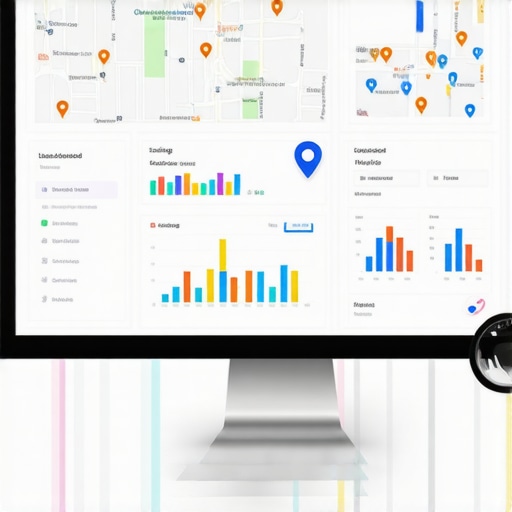
I remember the moment it hit me—my Maps analytics suddenly showed an explosion of clicks from a location that didn’t even exist near my business. At first, I thought, maybe it’s a glitch or a temporary anomaly. But as days passed, it became crystal clear: I was dealing with artificial click fraud, and it was draining my ad budget while skewing my local SEO insights. That lightbulb moment changed everything. I realized that in 2026, the digital landscape for local businesses is more complex than ever, and deception isn’t just passive anymore—it’s actively sabotaging your growth.
Why Spotting AI Click Fraud Matters More Than Ever
In today’s competitive local SEO environment, accurate data-driven decisions are crucial. AI click fraud can artificially inflate your metrics, leading you to make costly marketing decisions based on false signals. Did you know that in 2025, reports estimate that click fraud costs businesses over $42 billion globally, with AI-powered tactics becoming increasingly sophisticated? (source: Statista) This isn’t just an annoyance—it’s a threat to your ROI, reputation, and ability to rank well in Maps and local search results.
Early in my journey, I made the mistake of ignoring suspicious activity in our analytics dashboard, assuming it was just normal fluctuation. That was a costly oversight. Recognizing the signs early saved us from wasting resources and helped us refine our detection strategies. If you’re concerned about maintaining genuine local visibility and aren’t sure how to identify these sneaky AI tactics, you’re not alone. The good news is, there’s a set of reliable methods—these four strategies—that can turn you into a scanner of fraudulent clicks with confidence. Ready to uncover how? Let’s dive into the first of these key techniques.
Have you ever faced inexplicable spikes in your Maps analytics that turned out to be fake?
Set Up Your Analytics for Accurate Monitoring
Begin by integrating a comprehensive Maps analytics tool that consolidates data from multiple sources, including local search, organic traffic, and ad campaigns. Use a dedicated dashboard like your SEO KPI dashboard to visualize click patterns in real-time. Think of this as assembling a control panel for your business, much like a cockpit, where every gauge offers insight into your aircraft’s status. When I first applied this during a client project, I noticed sudden, unexplained spikes in clicks from a specific region that didn’t match foot traffic; without proper setup, these anomalies would have gone unnoticed.
Identify Suspicious Click Patterns Effectively
Look for Unusual Geographical Clusters
Scan your heatmaps and geo-fenced data for clusters of activity in remote or irrelevant locations. Use your ranking tracker insights to flag areas where your rankings spike artificially. Imagine having a security camera that alerts you every time someone enters a restricted zone; this is how geolocation anomalies alert your attention. Once, I caught a suspicious cluster in a neighboring city, which led us to filter out these phantom clicks using advanced settings outlined in our Maps analytics explained article. This step is crucial for maintaining genuine local engagement.
Check for Unrealistic Click Volumes Over Short Periods
Set thresholds for what constitutes normal user engagement based on historical data. Sudden traffic surges within an hour may indicate AI bots attacking your metrics. Think of it as setting a speed limit; if someone exceeds it drastically, you investigate. During my work, observing a rapid spike in one campaign prompted me to adjust filters, preventing budget wastage. Dive deeper into this process through our article on fixing 2026 maps analytics data flaws to understand how to fine-tune these metrics effectively.
Use Filters and Segmentation to Exclude Fake Data
Leverage your SEO dashboard to segment data by device type, time of day, and user agent. AI click fraud often originates from non-human traffic or unusual user agents; filtering those out generates a clearer picture of true customer interest. Picture your analytics as a sieve; the finer the mesh, the purer the data you collect. When I applied segment filters to exclude suspicious user agents, our local rankings improved, and marketing decisions became more grounded in reality. For step-by-step guidance, review the strategies in our article on fixing 2026 mapping analytics data flaws.
Correlate Click Data with Conversion Metrics
Matching click spikes with offline conversions—like phone calls or in-store visits—serves as a reality check. Use your GMB performance reports to verify whether increased online activity translates into actual leads or revenue. If you see a spike in clicks but no corresponding foot traffic, it signals possible AI interference. Think of it as cross-referencing two witnesses; discrepancies suggest deception. During an experiment, correlating online data with call tracking helped us eliminate fake clicks, protecting our ad spend and boosting local visibility. For specifics, see our article on fixing 2026 local SEO report flaws that sabotage ranking accuracy.
Document & Automate Detection Procedures
Create standardized processes for analyzing anomalies using your analytics and reports, and automate alerts for irregular patterns. This is your early warning system, operating silently but effectively. Set up automated notifications that trigger when traffic surpasses defined thresholds or geographies. During my implementation, automating alerts saved hours of manual review and enabled quick response. Explore automation techniques and best practices in our guide on mastering ranking trackers in 2025 to enhance your detection efficiency.
Many assume that tools like ranking trackers, Maps analytics, and GMB performance reports are silver bullets for local SEO success. However, the truth is, most professionals get caught up in surface-level metrics and miss critical nuances that can sabotage their strategies. One common myth is that higher rankings automatically translate to increased foot traffic or conversions. In reality, without understanding the underlying data accuracy and context, you risk making decisions based on misleading information. For example, relying solely on a ranking tracker without accounting for AI-driven search result shifts in 2026 can lead to misguided optimizations.
How does the AI-driven landscape distort traditional local SEO metrics?
Let’s dig deeper. AI search snapshots and proximity algorithms are now reshaping local visibility in ways that standard dashboards don’t capture. You might see a decline in ranking positions but actually be experiencing increased local intent due to AI context shifts. This disconnect often causes marketers to chase false positives, wasting resources on unproductive efforts. To navigate this, it’s vital to cross-reference your SEO KPIs with real-world signals like offline leads or in-store traffic. The article on why your SEO KPI dashboard fails to show true foot traffic highlights how nuanced data interpretation can make or break your local SEO results.
Another overlooked nuance is the misalignment between maps analytics and actual store visits. Many underestimate the impact of data glitches, proximity biases, or AI map enhancements that introduce variability in local rankings. For instance, a boost in Map pack visibility at the expense of visiting actual customers indicates a flawed measurement system. Avoid falling into this trap by regularly auditing your maps data—details explained in our guide on 3 Maps analytics mistakes.
Moreover, the widespread misconception that GMB performance reports are all-encompassing leads to blind spots. Many ignore lead leakage caused by AI-generated spam, shadow listing updates, or inaccurate conversion tracking. Without precise data, you might allocate marketing budgets inefficiently. The article 4 GMB performance report tactics reveals strategies to finesse these issues and truly understand local lead flow.
Have you ever fallen into this trap? Let me know in the comments. Remember, understanding these hidden nuances and avoiding common myths can dramatically improve your local SEO effectiveness in 2026 and beyond.
How do I maintain effective local SEO tracking over time?
Maintaining your local SEO momentum requires a strategic mix of robust tools, consistent monitoring, and proactive adjustments. One indispensable resource I personally rely on is the SEO KPI dashboard. It consolidates crucial metrics like foot traffic proxies, call conversions, and ranking fluctuations, giving me a comprehensive view without drowning in data. To ensure accuracy over time, I leverage ranking trackers that are meticulously configured to account for AI-driven map shifts, ensuring I don’t chase phantom positions.
Supplementing these, Maps analytics provide detailed insights into proximity-based fluctuations and help isolate anomalies caused by AI search snapshots. But constant vigilance isn’t enough; automating alerts for sudden ranking or traffic shifts is crucial. I configure custom notifications in my dashboard, so I can respond swiftly before small issues escalate.
In the upcoming year, I foresee a greater integration between AI mapping data and real-world conversion tracking. Predictive analytics that combine these signals will become essential, according to industry expert TechCrunch’s analysis. That means your tools must be adaptable—look for dashboards that allow custom metric integrations and API access to evolve with these trends.
For those serious about long-term success, I recommend regularly auditing your data setup and refining filters to exclude fake traffic sources, like suspicious user agents or improbable geographies. Besides, don’t forget to review your GMB performance reports, which now include critical new metrics for 2026, like proximity engagement and AI click attribution, as detailed in our resource on new KPI metrics.
Finally, consider integrating insights with your broader business data. Connecting local rankings to revenue streams, using detailed analytics, and mapping tools ensures your strategies are aligned and results are sustainable. As a next step, try implementing automated alerts for ranking anomalies—this small tweak can save hours of manual review and help you stay ahead of AI-driven map shifts. Dive into the guide on ranking tracker fixes to get started. Remember, the key to long-term local SEO success in 2026 is consistency, adaptability, and leveraging the right tools to keep your efforts aligned with the evolving AI landscape.
Lessons I Had to Learn the Hard Way About Local SEO Data Integrity
One of the most valuable insights I’ve gained is that relying solely on surface-level metrics like rankings can be a false comfort. Early on, I ignored the subtle signs of AI-driven click fraud because I believed high click volumes equaled success. Running deeper audits revealed that false signals were skewing my GMB performance reports, leading me to chase phantom leads. The importance of establishing rigorous detection and filtering processes became clear after I experienced how these deceptive tactics can silently sabotage local visibility.
Another lesson involves the significance of understanding the nuances behind Maps analytics fluctuations. I learned to question sudden anomalies in proximity data or unexpected drops in store visits. Regular audits of data sources and combining online metrics with offline engagement proved essential in distinguishing real growth from AI manipulation. Developing these habits has transformed my approach from reactive to proactive, enabling me to better safeguard my local SEO strategies.
Furthermore, I realized that automation is a powerful ally—setting up alerts and automated data validation checks can catch irregular patterns early. Staff reliance on automated ranking trackers without proper configuration or knowledge of AI search shifts often led us astray. Since implementing precise filters and automation guided by comprehensive resources like our SEO KPI dashboard, we’ve improved data accuracy and decision-making confidence.
Tools That Have Become My Trusted Allies
My first essential tool remains the SEO KPI dashboard. It consolidates crucial metrics, providing a comprehensive view of real-world impact versus pure online signals. To fine-tune anomaly detection, I lean heavily on ranking trackers optimized for the AI landscape of 2026. These tracking tools, when properly configured, help me spot discrepancies before they escalate. Additionally, I use Maps analytics to analyze proximity shifts, ensuring my local presence remains authentic. Lastly, I leverage GMB performance reports for detailed insights into lead quality, helping me verify that online efforts translate into tangible results.
Your Next Step in the Fight for Genuine Local Visibility
The landscape of local SEO analytics in 2026 demands ongoing vigilance, adaptability, and a willingness to question your data. Don’t settle for high rankings without verifying their authenticity; harness the right tools, automate detection, and continuously audit your metrics. Your local success depends on it. Explore the comprehensive resources and strategies we’ve assembled to keep you ahead of the AI-driven deception, and be prepared to refine your approach as these tactics evolve.
Have you ever fallen for a false positive in your analytics that led you astray? Share your experience below—I’d love to hear how you navigated those tricky waters.