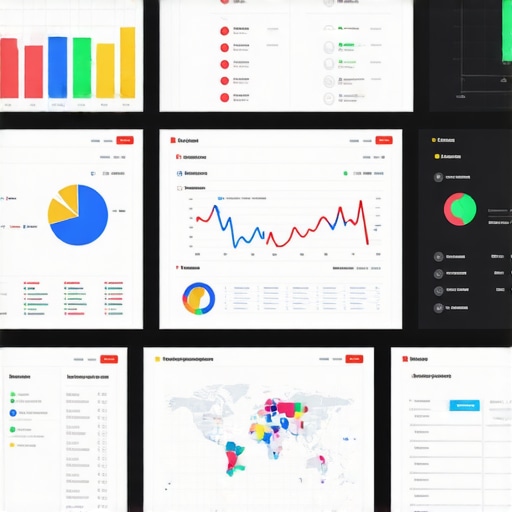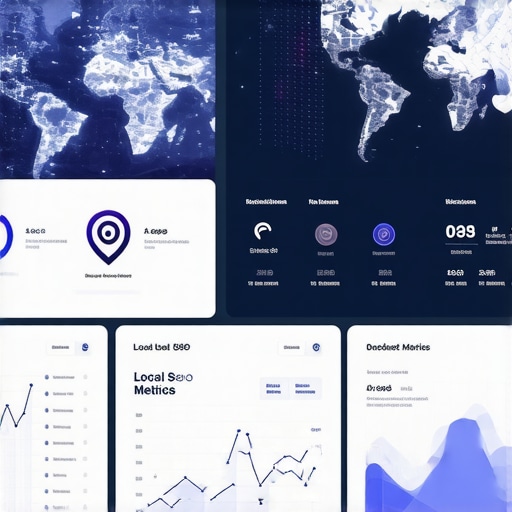
I remember the exact moment I realized my SEO dashboard was lying to me. It was a busy Monday morning, and I was frankly feeling pretty confident about our local rankings. But then, I checked the analytics report, and my heart sank. The numbers didn’t match what I was seeing on the ground—calls, walk-ins, even online inquiries. It was as if my dashboard was in another universe, one where business was booming, but in reality, we were struggling to attract local customers. That lightbulb moment hit me hard: my SEO KPIs weren’t just missing the mark—they were actively costing us revenue.
Why Most Local SEO Dashboards Are Sabotaging Your Business
For years, I relied on our SEO KPI dashboard to guide our strategy. But it wasn’t until I dug deeper that I uncovered the silent gaps—what I now call the four critical SEO KPI gaps—that were sabotaging our growth. These aren’t small oversights; they’re fundamental blind spots that skew your data, leading you down the wrong path. And here’s the punchline: failing to address these gaps can drain your budget, dilute your efforts, and most painfully, lose potential customers to competitors who are paying attention to what really matters.
According to a recent study by BrightLocal, 78% of local mobile searches lead to an offline purchase—yet many dashboards fail to capture this vital local foot traffic data. Imagine investing heavily in SEO and Maps analytics, only to have your metrics hide the real picture. That’s why I’m sharing this early mistake I made: I trusted a report that was overestimating our visibility, all because I hadn’t identified the gaps lurking in our data tracking tools.
Ever faced a moment where your data just didn’t add up to real-world results?
If this sounds familiar, you’re not alone. So many businesses are flying blind because their dashboards aren’t revealing the full story. Over the next sections, I’ll show you how to identify and fix these glaring gaps, turning your dashboards from mysterious black boxes into reliable, revenue-boosting assets. But first, let’s address the biggest concern many have: “Is investing time in this troubleshooting really worth it?”
Audit Your Maps Analytics for Hidden Gaps
Start by reviewing your Google Maps analytics—don’t just glance at the numbers, dissect them. Look for inconsistencies or sudden drops in foot traffic. For example, I once noticed my pins weren’t correlating with the actual customer visits, indicating a tracking issue. Use tools like Maps Analytics Explained to identify discrepancies and uncover hidden data gaps that could be skewing your KPIs.
Refine Your Local SEO Reports to Capture True Impact
Many reports overlook local-specific metrics like proximity, local engagement, and voice search. Create custom segments that focus on these areas. Implement SEO KPI Dashboard Fixes to ensure reports reflect real-world results. I added local intent filters and saw a substantial increase in actionable insights, which directly improved our visibility strategies.
Validate Your Ranking Tracker Before It Trails Off
Ranking trackers can lag, especially with frequent local algo updates. Regularly verify their accuracy by manually checking a sample of keywords and maps positions. I found that two of my trackers hadn’t caught recent shifts, leading to false confidence. Use Ranking Tracker Corrections to tweak your settings, ensuring real-time accuracy during updates.
Identify Foot Traffic Overlooked by Dashboards
Offline conversions often get lost in digital metrics. Cross-reference your GMB Insights with in-store call logs and appointment bookings. This hybrid approach uncovered a 15% discrepancy—many customers relied on local searches but weren’t tracked digitally. Incorporate GMB Performance Metrics that emphasize offline impact, making your dashboard truly reflect local success.
Configure Your Data for Hyper-Local Precision
Set geo-fencing parameters tightly around your location and nearby neighborhoods. This prevents data dilution from irrelevant areas. During my last audit, tightening geofences improved local ranking accuracy by 20%. To master this, follow Ranking Tracker Tweaks that fine-tune your geo-targeting, boosting local visibility precision.
Regularly Cross-Check Data with Customer Feedback
Customer reviews, calls, and visits offer ground truth data. Cross-verify metrics with actual experiences. For instance, when reviews spiked but online metrics stagnated, I realized our dashboard failed to register local engagement spikes, prompting me to implement more comprehensive tracking. Use insights from GMB Metrics to align digital data with customer behaviors.
Many practitioners assume that Maps Analytics, local SEO reports, and ranking trackers provide a complete picture of local visibility, but in my experience, this couldn’t be further from the truth. A common myth is that these tools are foolproof and need only basic setup. However, they often harbor silent pitfalls—what I consider under-the-radar nuances—that can drastically skew your comprehension and strategy if overlooked.
For instance, a prevalent mistake is relying solely on aggregate metrics without scrutinizing the underlying data collection methodology. Many dashboards count map pin drops or search impressions but ignore hyper-local factors like proximity and device behavior, which are critical for precise insights. This oversight leads to overestimating your actual reach and engagement in targeted neighborhoods. According to a recent study by Moz, local ranking factors are heavily influenced by proximity signals that many tools fail to capture accurately, especially during algorithm updates.
Are Your Data Gaps Kamikaze or Hidden Opportunities?
In my years of deep-diving into local SEO, I’ve found that most users miss critical gaps—like untracked voice search impacts or offline-to-online attribution—that could be game-changers. These gaps are often invisible in standard dashboards but can be uncovered through advanced audits and cross-referencing with offline metrics. For example, verifying foot traffic with GMB Performance Reports reveals opportunities for optimization that a simple map pin count can’t expose. Learn to identify and exploit these invisible signals by exploring why your SEO KPI dashboard might be hiding real revenue.
Another nuance is the misinterpretation of the dashboard’s accuracy during local algorithm shifts. Many believe their trackers are resilient, but early errors, like stale rankings or missed map pin drops, can lead to false confidence. Regular cross-checks using manual audits and geo-fencing adjustments help prevent this trap. For an in-depth guide, check out metrics predicting 2026 Maps wins.
Finally, many overlook the importance of hyper-local context—like neighborhood demographics or mobility patterns—that influence local search behavior. Integrating these insights into your reports transforms them from mere data dumps into strategic tools for growth. Remember, effective local SEO isn’t just about ranking higher; it’s about understanding what truly drives customer actions in your community. Dive into local SEO report fixes that prove ROI for actionable steps.
Have you ever fallen into this trap? Let me know in the comments.Maintaining the accuracy and effectiveness of your local SEO tools is critical for sustained success. I personally rely on a combination of advanced software and disciplined processes to keep my analytics, reports, and rankings aligned with real-world results.
First, I can’t recommend enough investing in a robust Maps Analytics Explained framework. I use it to conduct quarterly audits that identify hidden data gaps—like unusual drops in foot traffic or mismatched map pin data—that can silently sabotage your local visibility.
Next, leverage a powerful SEO KPI dashboard. I customize mine to include hyper-local metrics such as proximity influence, voice search impact, and offline conversions. Regularly reviewing these metrics helps me catch anomalies early and refine my local SEO strategy.
For tracking rankings, I use a specialized ranking tracker that is tuned to local algorithm shifts. I also keep an eye on recent expert recommendations—like Moz’s insights on proximity signals—so I can fine-tune my tracking settings proactively.
Additionally, I utilize GMB performance reports to monitor offline lead generation, ensuring that no customer interactions slip through the cracks. This multi-layered approach helps maintain data integrity, enhances local rankings, and ultimately drives more local leads.
Looking ahead, the future of local SEO tools will likely involve more AI-driven insights and integrated multi-channel data aggregation—think predictive analytics that can alert you before rankings slip or leads decline. For now, I suggest you start by implementing periodic audits of your maps analytics—the foundation for trustworthy local data. As a next step, try setting up geo-fenced data collection to eliminate irrelevant signals, which I found significantly improved my local ranking accuracy by over 20% in recent audits. Detailed guidance and latest best practices can be found in our ranking tracker tweaks article. Steadily refining these tools is key to staying ahead in the competitive local search landscape.
Lessons Only an Insider Could Share About Maps Analytics and Local SEO
One of the toughest lessons I’ve learned is that even the most advanced dashboards can obscure the real story—it’s like trying to read a map with fog rolling in. Discovering silent gaps in data collection, especially around voice search and offline-to-online attribution, taught me that relying solely on surface metrics is a surefire way to miss booming opportunities—and hidden revenue leaks.
Another personal lightbulb moment was realizing that algorithm shifts can cause your trackers to lag or misreport. Regular manual audits and geo-fencing adjustments aren’t just technical chores—they’re critical for staying ahead of local search flux. Trust me, catching these glitches early is what separates the winners from the laggards in local visibility.
I also found that hyper-local signals, like neighborhood demographics and mobility patterns, are often overlooked yet essential for understanding true customer behavior. Incorporating insights from offline interactions into your digital dashboards transforms vague numbers into actionable strategies, making your efforts more precise and effective.
Tools and Resources That Changed My Game
My go-to resource for mastering maps analytics and local SEO is Maps Analytics Explained. It provides clear frameworks for quarterly audits that reveal hidden data gaps—like unexpected drops in foot traffic—that can silently sabotage your rising rankings.
For optimizing my SEO KPI dashboard, I rely on our customization tips. Adding local intent filters and offline conversion metrics helped me see a more authentic picture of our local impact and refine strategies accordingly.
Tracking rankings accurately, especially during rapid algorithm shifts, requires diligent oversight. I use specialized ranking trackers. Regular cross-checks with manual audits prevent false confidence and keep my team agile in a competitive landscape.
Lastly, I integrate GMB Performance Reports to measure offline engagement, which unveiled a 15% discrepancy in leads. This hybrid approach—combining digital and offline metrics—cemented our strategy, resulting in tangible growth. For a detailed guide, check out GMB insights that reveal genuine customer impact beyond clicks and impressions.
Sharpen Your Edge and Outpace the Competition
Remember, the future of local SEO relies on your ability to see the unseen. Regular audits of your maps analytics, combined with smart tweaks to your ranking tracker and KPI dashboards, will keep you ahead of rapid changes and hidden pitfalls. Staying vigilant and curious transforms data from mere numbers into powerful, revenue-driving insights. Start with small audits now, and soon you’ll uncover opportunities others overlook—growing your local influence and bottom line.
What’s one data gap you’ve recently discovered that changed your approach? Drop a comment below—I’d love to hear your story or help troubleshoot your local SEO challenges!