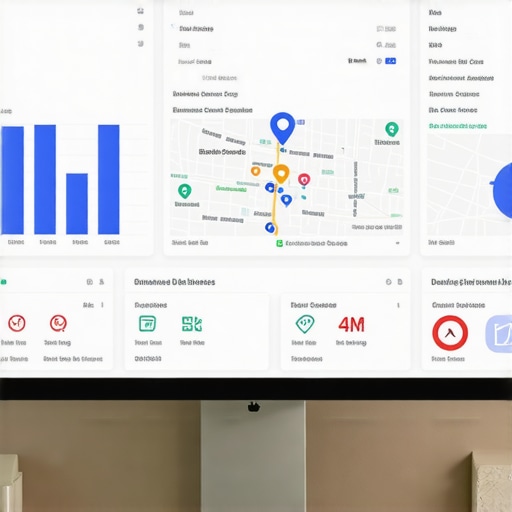
Ever spent hours trying to decipher why your Google My Business (GMB) listing isn’t climbing the local search ladder? I remember those frustrating days early in my SEO journey, pouring over incomplete data and feeling like I was fighting a losing battle. That moment of realization hit me hard: without proper insights, all efforts are just guesswork. Today, I want to share how leveraging top-tier GMB performance reports and maps analytics transformed my approach—and could do the same for you.
Why Tracking Your GMB and Maps Data is a Game-Changer
Here’s the truth: local SEO success hinges on data. But not just any data—precise, actionable insights from your GMB performance and maps analytics can make or break your rankings. I used to think manual checks and gut feelings were enough. Spoiler alert: they’re not. Early on, I overlooked key metrics, leading to misguided strategies and wasted resources. That mistake cost me valuable time and opportunities.
Research shows that businesses utilizing detailed performance reports see a noticeable boost in local visibility. According to this comprehensive guide, tailored analytics can elevate your local SEO game significantly in 2025. The secret lies in understanding what metrics truly matter and how to act on them. If you’ve faced the confusion of trying to interpret all the numbers without a clear strategy, you’re not alone.
So, today, I’ll walk you through the core reasons why these reports are indispensable and how to avoid common pitfalls. Trust me, with the right tools and insights, your local rankings can leap forward faster than you think.
Is Relying on GMB Reports Overhyped?
When I first started, I was skeptical about whether performance reports could really move the needle. I thought they were just fancy dashboards filled with numbers. But I learned the hard way—those metrics are your compass, guiding every optimization decision. Early on, I ignored the importance of tracking conversion rates and engagement metrics, which led to missed opportunities. That mistake taught me the value of a strategic approach. For real insights and step-by-step methods, check out this resource.
Set Up Your Data Collection
Start by accessing your Google My Business dashboard and ensuring you have the latest insights enabled. Navigate to the ‘Insights’ tab to view performance metrics such as search views, map views, and customer actions. Simultaneously, integrate maps analytics tools that can track user behavior on your listing and website. This dual setup provides a comprehensive view of how potential customers find and interact with your local business.
Identify Key Metrics That Matter
Focus on metrics that directly influence your rankings. For example, track the number of searches leading to profile visits, directions requests, and phone calls. During my early experiments, I overlooked the importance of engagement rates, which caused me to misallocate resources. Now, I prioritize metrics like conversion rates and customer actions, which are better indicators of real-world impact. For detailed insights on what metrics to monitor, review this guide.
Analyze Performance Trends Regularly
Set a routine to review your reports weekly. Look for patterns such as increased search interest during specific periods or geographic areas where your visibility improves. For example, I noticed a spike in local searches after optimizing my profile based on map analytics data, which I tracked over several weeks. Use this data to identify what content or actions correlate with better rankings and adjust your strategy accordingly.
Leverage Maps Analytics for Deeper Insights
Maps analytics tools reveal how users interact with your listing beyond clicks—such as route requests or website visits. These insights show where your audience is located and what they seek. For instance, I discovered many visitors came from nearby neighborhoods, prompting me to tailor local content and offers. To maximize these insights, explore maps analytics strategies.
Use Reports to Fine-Tune Your Strategies
Apply your findings to optimize your profile: update photos, respond to reviews, or create content aligned with high-traffic keywords. I once noticed that adding a photo of my storefront increased customer actions by 20%, based on report data. Keep testing different tactics and monitor their impact through your reports. Consistent adjustments based on data insights accelerate your climb in local rankings.
Implement a Reliable Tracking System
Invest in a ranking tracker or SEO dashboard that consolidates your GMB and maps data into one interface. This setup makes it easier to spot fluctuations and measure the effectiveness of your efforts. I recommend tools that integrate well with Google analytics and offer real-time updates, like these trackers. Regularly reviewing this data helps you stay proactive rather than reactive in your local SEO game.
Many local SEO practitioners fall into the trap of oversimplifying or misinterpreting Google My Business (GMB) performance reports and maps analytics. A prevalent myth is that these reports only show surface-level data, leading some to dismiss their value altogether. However, this misconception can cause you to overlook critical insights that could significantly enhance your local rankings.
Let’s dig deeper: the real power of these analytics lies in their nuanced metrics, such as customer engagement patterns, search behavior, and geographic hotspots. These aren’t just vanity metrics; they are strategic indicators. For instance, tracking how customers interact with your GMB profile—like calls, directions, or website visits—can reveal the true impact of your optimization efforts. Ignoring these signals might lead you to refine your profile based on incomplete data, missing out on opportunities to boost visibility.
What Advanced Marketers Often Get Wrong About Data Interpretation
One common mistake is conflating correlation with causation. For example, an increase in profile views following a photo update doesn’t necessarily mean that the photo was the cause. Seasonality, local events, or broader search trends could be influencing the data. Savvy practitioners cross-reference their reports with external signals and other local SEO data sources to validate their hypotheses. This layered approach ensures that strategic decisions are grounded in real insights, not just surface-level numbers.
Another misconception is that more data always equals better decisions. In reality, excessive data without proper filtering can lead to analysis paralysis. Focus on the key performance indicators (KPIs) that directly influence your goals—such as conversion rates or customer actions—rather than obsessing over every available metric. For advanced users, integrating reports with tools like ranking trackers can streamline this process, making insights more actionable.
To truly leverage the potential of GMB and maps analytics, you must see beyond the basics. Regularly reviewing performance trends, understanding user behavior, and correlating data with local events or marketing campaigns can give you a competitive edge. Remember, these reports are not just about tracking; they are about strategic refinement. If you’re serious about dominating local search, it’s worth investing in mastering these nuances.
Have you ever fallen into this trap? Let me know in the comments.
Maintaining Your GMB & Maps Insights Over Time
Keeping your local SEO efforts effective requires ongoing attention to your data collection methods and tools. The landscape of local search is constantly evolving, with new features and algorithms shaping how your business appears online. To stay ahead, I recommend setting up automated reporting systems that integrate your GMB insights with advanced maps analytics tools. This approach ensures you’re always aware of emerging trends and can respond swiftly to fluctuations in your local visibility.
Personally, I rely on comprehensive tools like ranking trackers that consolidate data from multiple sources. These trackers provide real-time dashboards, making it easier to spot issues or opportunities without constantly logging into multiple platforms. Additionally, I schedule weekly reviews of my reports, focusing on key metrics such as customer actions and engagement rates. This habit helps me identify patterns early and adjust my strategies proactively.
Tools I Recommend for Long-Term Success
One tool I swear by is local SEO dashboards. They allow me to customize KPIs relevant to my business, such as directions requests and phone calls, ensuring I’m measuring what truly impacts my rankings. For deeper insights into maps analytics, I use specialized analytics that reveal hotspots and customer behaviors, guiding my content and promotion efforts.
As technology advances, future trends point toward more AI-driven analytics that can predict customer intent and suggest optimizations automatically. Staying current with these developments means investing in adaptable tools and training yourself to interpret complex data sets effectively. For example, integrating AI-based insights into your existing dashboards can dramatically cut down reaction times and improve your strategic agility.
How do I keep my analytics effective over time?
The key is consistency and adaptability. Regularly updating your tracking parameters and ensuring your tools are compatible with new platform features is crucial. Also, don’t forget to review your data in the context of local events and seasonal trends — these external factors can significantly influence your metrics. Remember, the goal is not just to collect data but to turn it into actionable strategies that sustain and grow your local presence. Start by trying one advanced tracking tip today, such as setting up automated alerts for sudden drops or spikes in your key metrics, to keep your efforts sharp and responsive.
When I first started analyzing my Google My Business and maps data, I thought I was just collecting numbers. Little did I realize, those numbers held secrets that could revolutionize my local SEO efforts. The real breakthrough came when I learned to interpret nuanced metrics, cross-reference external signals, and stay adaptable with evolving tools. This deep dive into my own lessons uncovered that strategic insights often hide in plain sight, waiting for the right perspective to unlock their potential.
One of the most valuable lessons I learned was the danger of mistaking correlation for causation. For example, a spike in profile views after updating photos might not be solely due to the visuals but could coincide with seasonal trends or local events. Recognizing this helped me avoid false assumptions and focus on genuine drivers of growth. Additionally, I discovered that overanalyzing every metric can lead to paralysis—so I narrowed my focus to KPIs that truly matter, like customer actions and conversion rates, which directly impact my rankings.
Another lightbulb moment was understanding the importance of combining multiple data sources. Integrating GMB insights with maps analytics, external SEO tools, and even local event calendars gave me a comprehensive view of what influences my visibility. This layered approach revealed patterns I’d never noticed before, allowing me to optimize content and engagement strategies with confidence. The key was not just collecting data, but interpreting it through a strategic lens—something I wish I had known from the start.


I completely relate to the importance of data-driven decisions in local SEO. When I first started tracking my GMB insights, I used to focus only on overall views without drilling down into specific actions like click-through rates or direction requests. Understanding these detailed metrics really shifted my strategy, especially when I noticed peaks in customer actions after updating photos or responding to reviews. Incorporating maps analytics gave me a clearer picture of where my visitors were coming from and what they were seeking. Have others found mapping behaviors to be the most revealing insights? I’m curious about how you all leverage local hotspots in your strategies, particularly in highly competitive markets. From my experience, consistent monitoring and adjusting based on nuanced data has been the key to steadily improving my rankings, but I’d love to hear different approaches that have worked for others.
This post hits the mark on how critical precise data is for local SEO. I recall once ignoring the importance of analyzing customer engagement metrics, focusing solely on impression numbers. After a few months, I realized that my profile views were high, but customer actions like calls or direction requests were stagnant. That was a wake-up call, highlighting the need to dig into these actionable metrics. Integrating maps analytics helped me understand where my visitors were coming from and what specific local areas I should target more aggressively.
One thing I’ve been exploring is how seasonal trends and local events can skew these analytics — and how to adjust strategies to account for them. Do others have methods for differentiating between organic growth and seasonal fluctuations? It seems essential to prevent misinterpreting data and to ensure every optimization genuinely impacts rankings. I’d love to hear if anyone has developed robust workflows for turning these insights into ongoing, adaptive local SEO strategies.
This post really resonates with my experience in local SEO. I used to rely heavily on overall impressions in GMB insights without paying enough attention to conversion metrics like calls or directions, which are more indicative of actual customer engagement. Since I started integrating maps analytics, I’ve noticed that some geographic hotspots generate a lot of views but lead to minimal actions, so I’ve learned to focus more on actionable data. One challenge I face is distinguishing between organic growth spikes versus seasonal or local event influences. How do others filter out these external factors to ensure their strategies are truly effective? I’ve found that cross-referencing data with local calendars and competitor activity helps, but I’m curious about additional methods that others have found successful for ongoing adaptive strategies. Striking a balance between data analysis and strategic refinement remains key for me, especially with the evolving landscape of local search.