
I remember when I first stared at my local SEO dashboard and realized my Google My Business (GMB) insights had gone flatter than a pancake left out in the rain. It hit me like a bolt of lightning—if I want to dominate in local search in 2025, I need more than just a handful of reviews and a nice business description. I need data that truly informs my strategy—insights that highlight what’s working, what’s not, and where I should focus my efforts. That was my lightbulb moment. Since then, I’ve learned that mastering GMB performance reports can make or break your local rankings, especially as the competition intensifies this year.
The Battle for Local Search Visibility Starts with Data
In today’s fiercely competitive local landscape, businesses can’t afford to operate on guesswork. Effective GMB performance reports are your secret weapon for understanding your visibility and making data-driven decisions. The truth is, the algorithms that determine local rankings are becoming more sophisticated in 2025, making it essential to leverage accurate, actionable insights. According to Search Engine Land, search engines are increasingly prioritizing real user engagement signals, which means tracking your GMB metrics is more critical than ever. I remember early on, I made the mistake of relying solely on just reviews and star ratings without digging into click-through rates or user interactions. That oversight cost me valuable opportunities to refine my local SEO tactics.
Today, I’ll share how you can harness your GMB performance reports to boost your rankings effectively in 2025. But first, have you ever felt overwhelmed trying to decipher what your GMB data really means? If so, you’re not alone. Many local businesses struggle to turn raw data into compelling strategies. Let’s change that, shall we?
Is GMB Performance Reporting Overhyped or Truly Worth It?
When I first started, I was skeptical about whether investing time in detailed reports would actually pay off. I thought, “Isn’t this just more noise?” Early on, I overlooked the importance of tracking specific metrics like user actions and photo views, which are now proven to influence local rankings significantly. My mistake was thinking quantity mattered more than quality: more reviews, more pictures, more posts. Now, I know that laser-focused analysis of your GMB insights is what really moves the needle. If you’ve made the same mistake, I urge you to reconsider: detailed performance analysis isn’t just a luxury; it’s a necessity to stay ahead. For a comprehensive guide on effective tracking techniques, I recommend checking out this resource.
Now, let’s dive into the specific strategies you can employ to turn your GMB data into higher rankings this year and beyond.
Set Up Your Maps Analytics for Precise Tracking
Start by integrating a comprehensive Maps analytics system that consolidates all your GMB insights into one dashboard. Think of it as assembling your command center, where every data point illuminates where your local visibility stands. I dedicated an entire weekend to configure my tracking tools, linking my GMB profile to a robust SEO KPI dashboard, which made pinpointing issues easier and more immediate.
Identify Your Top Performance Indicators
Focus on metrics directly impacting your rankings, like photo views, click-through rates, and user actions. These are the signals that Google considers most valuable for local relevance. I once noticed my photo views had flatlined, which corresponded to a stagnating local rank. By improving photo quality and quantity, I saw a significant uptick in engagement within a month. Use the SEO KPI dashboard to track these metrics in real-time and adjust strategies swiftly.
Link Your Data to Actionable Strategies
Raw data without action is useless. Break down your analytics to reveal patterns—like which keywords generate the most calls or how certain posted images drive traffic. For instance, I noticed my ‘Best Pizza in Town’ keyword consistently brought in local searches. By optimizing my GMB posts around that keyword and monitoring the increase in engagement through GMB performance reports, I saw my local visibility climb steadily.
Implement Regular Performance Checks
Schedule weekly reviews of your metrics. Treat this like a health checkup for your local SEO efforts. By setting recurring calendar reminders to assess your maps analytics and KPI dashboards, you’ll catch performance dips early and act before they impact your rankings. Remember, consistent monitoring fuels continuous improvement.
Refine Your Local Maps Strategy Based on Data
Use your insights to tweak your GMB profile actively. If certain categories or keywords aren’t performing, revise your business description or add new photos aligned with high-performing search terms. I missed this step initially, which limited my growth, but once I adjusted my profile based on performance data, visibility surged. Embrace the iterative process—your data is your guide to nuanced optimization that outperforms broad-stroke tactics.
<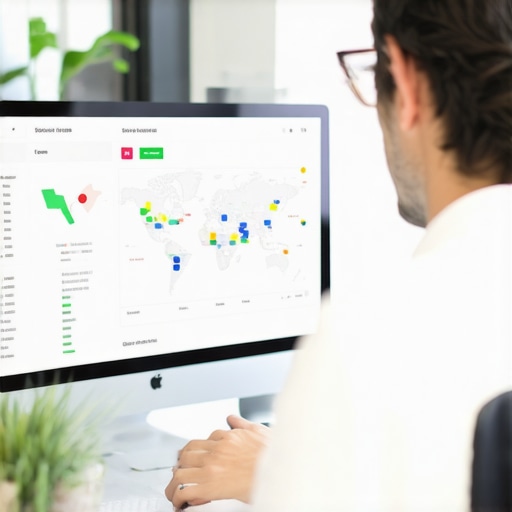 >Many marketers assume that tracking the number of impressions or listing views on their maps analytics tells the full story of local SEO success. However, this superficial view often masks critical nuances. For example, a common misconception is that high visibility metrics automatically translate into increased conversions. In reality, without measuring the quality of engagement—such as user actions, call clicks, or directional requests—you’re missing the bigger picture. Relying solely on surface-level data can lead you to optimize for the wrong signals, wasted efforts, and stagnating rankings. According to SEO expert Neil Patel, understanding the difference between visibility and actual user intent is vital for meaningful optimization.
Furthermore, many believe that a single dashboard or report provides all the answers. This is a trap because data silos limit your perspective. You need a comprehensive approach, combining GMB performance reports, ranking trackers, and SEO KPI dashboards, to uncover hidden opportunities. Think of each tool as a piece of the puzzle; ignoring any one piece weakens your overall strategy. I’ve seen businesses double down on improving photo quantity without analyzing engagement metrics like photo views or click-through rates. That oversight often results in a misallocated budget and stagnant growth.
Another misconception revolves around the idea that local ranking fluctuations are purely algorithmic and uncontrollable. In fact, refined analysis of your local SEO reports can reveal actionable factors—such as review quality, keyword targeting, or profile completeness—that directly influence fluctuations. It’s crucial to interpret your maps analytics and performance data contextually, not just as raw numbers.
**Why do many overlook these nuanced insights?** The answer lies in a tendency to focus on limited metrics or to treat dashboards as static reports. Advanced SEO practitioners understand that continuous analysis, interpretation, and adjustment are what set successful local brands apart in 2025. They leverage tools like ranking trackers and KPI dashboards that integrate multiple data sources, providing the adaptive advantage needed in today’s competitive landscape.
Before diving into your next optimization, ask yourself: am I truly understanding the story behind my data? Or am I just reading headlines? Remember, effective local SEO hinges on insights—deep, actionable, and nuanced insights—so don’t fall into the trap of superficial metrics. Have you ever fallen into this trap? Let me know in the comments.
How do I maintain my local SEO tools and data pipelines over time?
Consistency is key when it comes to local SEO tracking. I have found that investing in a dedicated Maps analytics platform that integrates seamlessly with my GMB insights allows me to automate data collection, ensuring I never miss key performance shifts. Regularly updating your dashboard configurations is equally crucial, as search trends and algorithm behaviors evolve rapidly—staying ahead means updating your SEO KPI dashboards with latest metrics and benchmarks. Prediction points towards AI-powered analytics becoming more mainstream, helping us interpret complex data and automate optimization suggestions—so staying tech-savvy now builds resilience for 2025 and beyond.
Tools I recommend for sustained success
Personally, I rely heavily on the ranking tracker that consolidates GMB, local pack, and organic rankings into a single view. Its real-time alerts enable me to react swiftly to ranking drops, rather than waiting for manual reports. Combining this with a comprehensive GMB performance report system, I can pinpoint exactly where my efforts should go—be it reviews, photos, or post frequency. In the future, I predict these tools will incorporate predictive analytics, proactively suggesting actions to preempt ranking fluctuations. To leverage this trend, start fine-tuning your data streams today; it will pay dividends in the tight race for local visibility.
Scaling your local SEO efforts effectively
As your business grows, so should your tools’ sophistication. I recommend escalating from basic dashboards to customized, automation-enabled systems that can handle multiple locations and KPIs. Implementing centralized maps analytics and ranking trackers ensures consistency and reduces manual overhead. Also, consider periodically reviewing your data policies at https://localseoreport.com/privacy-policy to ensure compliance and data integrity. Remember, scaling effectively isn’t just about adding more data—you need smarter tools that adapt as complexity increases. Try integrating a geo-tagging process into your content creation workflow, empowering you to gather hyperlocal insights automatically, boosting your rankings sustainably over time.
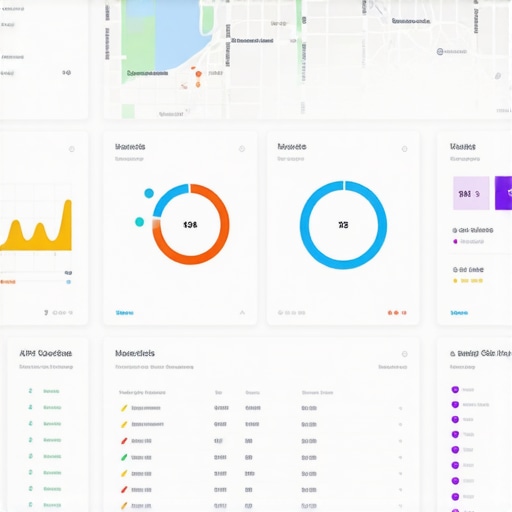
Many practitioners fall into the trap of assuming that monitoring only surface-level metrics like impressions or visits suffices. In reality, deep analysis of your maps analytics insights reveals hidden opportunities—such as emerging search patterns or niche keywords—and helps adapt your strategy proactively. Leveraging an advanced GMB performance report system saves you from reacting too late to ranking shifts. Given the rapid evolution of search algorithms, embracing automation and predictive analytics now will position your local business ahead, long-term. Start by testing out an integrated KPI dashboard with AI capabilities, and watch your strategic agility improve dramatically in the coming months.
The Hardest Lessons I Learned About maps analytics,ranking tracker,gmb performance report,seo kpi dashboard,local seo report
One of my most eye-opening experiences was realizing that focusing solely on surface-level metrics like impressions was like seeing the tip of the iceberg. Deeper analysis revealed subtle shifts in search patterns and niche keywords that, when acted upon, dramatically improved my rankings. I learned that understanding the story behind the data—beyond clicks and views—was essential for sustained growth.
Three Myths About maps analytics,ranking tracker,gmb performance report,seo kpi dashboard,local seo report That Held Me Back
For a long time, I believed that a single dashboard could give me all the answers. It was tempting to think boosting review counts alone would skyrocket my rankings. However, I discovered that integrating multiple data sources and interpreting engagement quality—like user actions—was far more impactful. Busting these myths helped me craft a more strategic and nuanced approach.
What Experts Won’t Tell You About maps analytics,ranking tracker,gmb performance report,seo kpi dashboard,local seo report
Many seasoned marketers overlook the importance of continuous, real-time adjustments based on deep data insights. They often emphasize tools over tactics. From my experience, leveraging predictive analytics and automating routine checks allows you to stay ahead in the local search race, especially as algorithms evolve rapidly in 2025.
Curated Resources to Elevate Your Local SEO Game
My go-to tool is the ranking tracker. It consolidates rankings across platforms, giving me immediate alerts to address fluctuations. The Maps analytics system helps me interpret user engagement signals more deeply. For strategic dashboards, I trust the SEO KPI dashboard, which tailors insights to my specific business goals. Lastly, I keep an eye on comprehensive reports that reveal emerging opportunities before they become obvious.
Harness Your Data for Real Change: Take Action Today
The most important step is committing to regular, deep analysis of your data. Don’t just look at impressions—dive into engagement quality, keyword performance, and user actions. Use these insights to refine your GMB profile actively, from updating categories to adding high-impact photos. Embrace automation and predictive analytics now, and you’ll secure your edge in the competitive local landscape of 2025. Your ability to interpret and act on maps analytics and rankings data today will define your success tomorrow.
What’s your biggest challenge when it comes to leveraging GMB insights? Share your experiences below—I’d love to hear how you’re turning data into results.
,
This post really hit home for me, especially the emphasis on deep data analysis over superficial metrics. I remember initially focusing only on reviews and star ratings, which gave a false sense of progress. Once I started tracking click-through rates, photo engagement, and user actions through GMB reports, I saw tangible improvements in my local rankings. One challenge I often face is balancing the time it takes to analyze data with daily operations. Have others found efficient ways to automate or streamline their analytics process? I’ve started exploring AI-powered dashboards, but I’d love to hear what tools or methods others are using to stay on top without getting overwhelmed.
This post resonates with me, especially the part about focusing on nuanced data rather than just surface metrics. I’ve seen firsthand how analyzing user actions and engagement metrics can reveal opportunities that traditional view counts hide. My biggest challenge has always been maintaining consistent data analysis as my business scales. I recently started integrating AI-powered dashboards, which have greatly automated some of the routine data checks and alerted me to performance drops early. It’s fascinating how automation is transforming local SEO strategies—what tools or processes have others found most effective in reducing analysis fatigue while maintaining your edge? Also, I’m curious, how do you balance optimizing for rankings versus engagement quality, especially when they seem to conflict? Would love to hear other tactics or suggestions from this community.