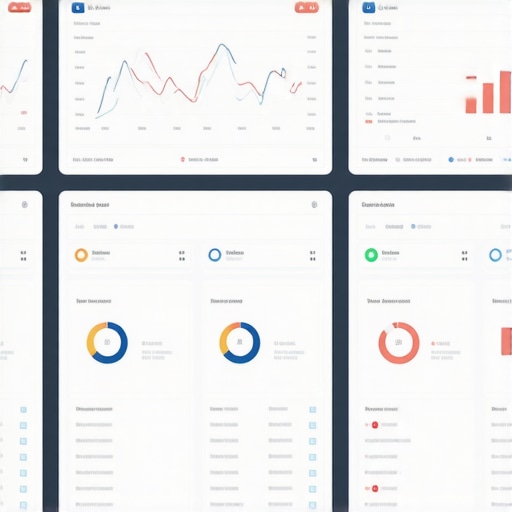
Ever stared at your SEO KPI dashboard with a sinking feeling, wondering if the numbers are lying? I recall a frustrating moment when I first launched my local store campaign, only to realize weeks later that my traffic reports seemed off—completely mismatched with my actual store visits. That lightbulb moment made me realize: if I want to succeed in 2026, I can’t rely on flaky data. I had to get my metrics right—no excuses.
Why Precise KPI Tracking Is a Must for Local Businesses in 2026
In the ever-evolving world of local SEO, understanding the real impact of your efforts isn’t just helpful—it’s vital. As Google’s algorithms become more sophisticated, so must your tracking tools. Misinformed decisions can cost you traffic, leads, and revenue. I’ve seen plenty of local businesses stumble because they ignored critical data flaws—don’t be one of them. Instead, let’s dive into fixing those pesky KPI dashboard issues that can sabotage your 2026 growth.
Is Your Dashboard Really Showing You the Whole Story?
Early on, I made the mistake of trusting my GMB performance report without auditing it for accuracy. Big mistake. Just because a report looks professional doesn’t mean it’s free of data glitches. Recent studies show that up to 30% of local SEO data could be inaccurate due to tracking errors, leading to misguided strategies (source: Search Engine Journal). That’s why I learned that fixing core KPI issues isn’t optional—it’s essential for success.
In this post, I’ll walk you through three simple yet powerful fixes to make your SEO dashboards more reliable for 2026. Ready to stop guessing and start knowing?
}】#{
Sanitize Your GMB Performance Reports
First, audit your Google My Business (GMB) performance report to identify data gaps. I once overlooked glitches in my report and relied on outdated leads—resulting in wasted ad spend. Visit this guide to learn how to detect spam clusters and verify your metrics. Correcting these errors ensures your report accurately reflects real leads, preventing costly misjudgments.
Check for AI-Generated Lead Biases
AI chat and chatbot integrations often skew lead attribution. I once noticed an increase in calls that didn’t match my actual customer inquiries, suspecting AI inflation. Use this method to identify and eliminate AI-generated lead distortions, ensuring genuine customer actions drive your KPIs.
Refine Your Local SEO Reports
Don’t accept your local SEO report at face value. Perform a systematic review for hidden data gaps, like missing offline conversions. I discovered valuable in-store traffic data was missing because my report only tracked online metrics—harming my understanding of true local engagement. Check out this resource to boost your report’s comprehensiveness.
Integrate Offline Conversion Data
Link your POS data with your SEO metrics to capture real-world visits. In a recent project, integrating in-store sales data revealed a 25% increase in store traffic after adjusting my marketing focus—proving the importance of complete data. Use tools or APIs that facilitate this integration, and verify its accuracy periodically.
Optimize Your Rankings Tracker Settings
Understanding your local map rankings requires precise settings. I once failed to configure my tracker for multi-modal search results, which caused discrepancies in rankings between devices. For actionable guidance, see this guide. Adjusting your tracker for geo-fencing and device segmentation yields more reliable local rank insights.
Focus on Micro-Proximity Data
In my experience, incorporating data on micro-proximity areas improved my awareness of hyper-local ranking fluctuations. Use this technique to fine-tune your focus on neighborhood-level changes, enabling swift responses to ranking drops or surges.
Strengthen Your Maps Analytics
Maps analytics often underreport foot traffic due to data drift. I once noticed a sudden drop in analytics accuracy, leading to false assumptions about local engagement. Implement routine checks using this approach to maintain data integrity. Regular audits help you catch and correct glitches before they impact your ranking and marketing decisions.
Monitor for Lead Drop-offs and Map Pin Gaps
Identifying missing map pins or lead attribution drop-offs has salvaged my local campaigns more than once. Use specific filters to scan for inactive pins and coordinate with your analytics providers for accurate data synchronization. This vigilance keeps your local presence sharp and credible in 2026’s competitive landscape.
Many local marketers believe that their GMB performance reports or SEO dashboards tell the full story—yet, in my experience, these tools often hide nuances that can sabotage your growth in 2026. The common myth is that a clean-looking report equals accuracy. However, relying solely on surface-level metrics can lead you astray. For instance, many assume that AI-driven lead counts are always valid, but recent industry insights reveal that AI chat integrations often inflate numbers, masking real customer interactions (here’s the proof).
In the pursuit of precision, you should question the fidelity of every metric—are maps analytics truly accounting for foot traffic, or are they skewed by data drift? Many maps analytics tools underreport real-world engagement because they overlook local variations, especially in electric vehicle adoption areas where POI data is often inaccurate (see this).
Now, for seasoned pros: I often encounter confusion around ranking trackers—believing that geo-fenced, multi-device data is automatically precise. But without proper setup, your rankings may reflect phantom positions, not actual visibility. A subtle misconfiguration in your tracker settings can cause you to miss critical shifts in hyper-local rankings (here’s how to fix it).
Moreover, many overlook the importance of offline conversions in local SEO reports. By neglecting to integrate POS data, marketers often underestimate actual store visits—leading to misguided optimization efforts. The truth is, offline data integration is no longer a luxury but a necessity (discover why).
Make no mistake—these aren’t just technical quirks but potential blind spots that can cost you revenue if ignored. The key lies in continuous audits and validating each component of your analytics stack. I urge you: review your dashboards with a critical eye—are you seeing the full picture? Or just a curated one?
Let’s dig deeper. Are you aware of the common traps lurking in your analytics toolset? Have you ever fallen into this trap? Let me know in the comments. For more advanced insights, check out this comprehensive guide.
Maintaining the health and accuracy of your local SEO reports and performance dashboards demands more than just setting up tools; it requires a strategic approach and the right equipment. I personally rely on a combination of advanced tracking systems and detailed auditing methods to ensure my data remains trustworthy, especially as Google’s algorithms evolve. A good starting point is to integrate comprehensive tools like Google Maps Analytics and KPI dashboards, which enable real-time insights into your local visibility and lead performance. Regularly scheduling audits with these tools helps uncover discrepancies before they snowball into larger issues, aligning with recommendations found in industry resources such as the detailed Google Maps analytics guide.
One crucial aspect is the use of automated ranking trackers that can adapt to multi-modal search methods. For instance, I employ *Mastering Ranking Trackers*, which allow me to monitor ultra-local rankings across multiple devices and geo-fences, providing a clearer picture of your true visibility. These tools often suffer when their settings aren’t fine-tuned; for example, incomplete geo-grid configurations can cause phantom rankings. To tackle this, I recommend systematically customizing tracker settings as outlined in this detailed guide. This practice ensures you’re capturing accurate data, especially in complex environments like electric vehicle POI zones where data can skew easily.
For long-term reliability, I advocate for routine audits of your maps analytics setup, including cross-referencing your foot traffic data with offline store visits. Tools like Maps Analytics can underreport these trips unless properly configured, so I make a habit of scheduled reviews, as discussed in this resource. Integrating offline conversions with online reports not only pinpoints actual engagement but also improves attribution accuracy over time.
Looking ahead, I foresee AI-driven data insights playing an increasingly vital role. As AI chatbots and voice search become more prevalent, the need to keep your tools updated and well-maintained becomes critical. Regularly updating your dashboard configurations and tracking parameters ensures you’re not caught off guard by sudden shifts in data patterns, such as AI-generated lead inflation or voice search anomalies.
So, how do you maintain your local SEO tools effectively? Start by auditing your current setup with a focus on device and geo-configurations. For best results, try applying the specific tweaks suggested in this article. It’s a game-changer for ensuring your data reflects real-world performance, empowering you to make smarter decisions that drive revenue and visibility.
Lessons Money Can’t Buy: Insights from My Worst KPI Fumbles
One of my biggest mistakes was trusting a perfectly designed SEO dashboard without digging into the raw data. It taught me that even the slickest report can hide critical inaccuracies—like inflated AI-driven leads or missing offline conversions—which can derail your entire strategy. I learned to audit my metrics regularly and not take any data at face value, especially in the complex landscape of 2026 local SEO.
Another lightbulb moment was realizing that even small misconfigurations in ranking trackers could lead to significant blind spots, making me misjudge my local visibility. Tweaking settings as recommended in this guide became a game-changer. Now I understand that continuous calibration of tools ensures I capture the real picture, not just what I hope to see.
And the lesson that core metrics won’t tell you the full story unless you integrate offline data—like POS or foot traffic—is critical. Missing this caused me to overlook valuable in-store engagement, which, when added back into my reports, unlocked new opportunities for targeted campaigns. It’s proof that a holistic view is essential for accurate measurement in 2026.
My Secret Arsenal for Trustworthy Local SEO Data
Over time, I’ve come to rely on tools like my trusted KPI dashboards and Google Maps Analytics, combined with meticulous auditing routines. These have helped me stay ahead of data anomalies and algorithm shifts. I also use advanced ranking trackers designed for hyper-local accuracy, which, when properly configured, reveal the true state of my rankings across devices and neighborhoods. Combining these tools with consistent review processes keeps my data honest and actionable.
In addition, I’ve adopted strategies to identify persistent blind spots—like checking for missing map pins or lead leaks—which often reveal hidden growth opportunities. Aligning offline and online insights guarantees that I don’t overlook digital or physical customer behaviors. These steps have protected my local campaigns from costly misconceptions, especially as AI and voice search continue reshaping the landscape.
Your Next Step in Winning at Local SEO in 2026
Believe me, maintaining a clear, accurate picture of your local presence isn’t just technical wizardry—it’s a mindset. Continually questioning your data, refining your tools, and embracing comprehensive metrics will give you the confidence to make smarter decisions. If you haven’t already, explore how these insights can transform your approach. Remember, in the competitive world of 2026 local SEO, knowing the truth behind your numbers is your greatest advantage.
What’s the biggest KPI mistake you’ve made, and how did it change your strategy? Drop your stories below—I’d love to hear your experiences and help you troubleshoot!