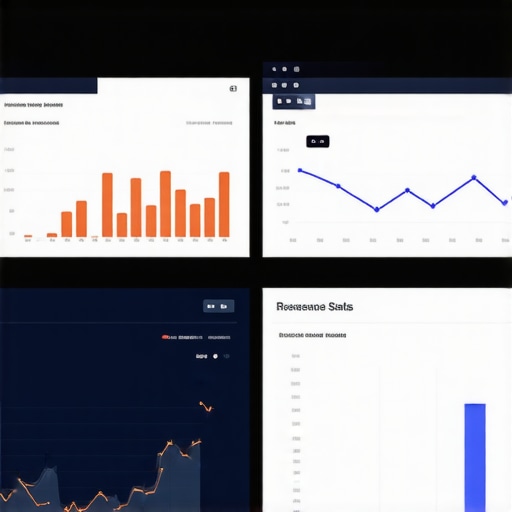
Last week, I sat down with my SEO dashboard, expecting a clear picture of my campaign’s progress. Instead, I was greeted with blank spots and missing numbers. It was like trying to navigate in a fog—confusing and counterproductive. That’s a lightbulb moment I won’t forget. I realized I had been overlooking some key revenue metrics that could unlock real growth, even in a competitive landscape that’s getting tougher by the day.
Why Missing These Revenue Stats Could Cost You Big Time
If you’re relying on your SEO KPI dashboard to steer your strategies, you’re assuming it covers everything. But I’ve learned the hard way that some revenue indicators—those direct signals of your financial wins—are often overlooked. Including these four vital stats in your 2026 dashboard could be the difference between sustainable growth and stagnation. When I first ignored them, my analytics gave a false sense of security, and I missed opportunities to optimize for actual sales.
Could Your Dashboard Be Sabotaging Your Growth?
Early in my journey, I made the mistake of focusing solely on rankings and traffic. I ignored how many of those visitors actually turned into revenue. It’s a common trap—without concrete revenue metrics, your SEO efforts can feel like shooting in the dark. If this resonates with you, then keep reading. We’ll uncover these four revenue stats that should be front and center in your KPIs for 2026. Knowing them will help you craft strategies rooted in real-world results, not just rankings. Ready to turn your dashboard into a revenue-generating powerhouse? Let’s get started and learn how to spot what you might be missing.
Prioritize Your Revenue Metrics in Your Dashboard
Start by integrating concrete revenue indicators into your SEO KPI dashboard—this means tracking metrics beyond rankings and traffic, such as local conversions, call volumes, and online-to-offline purchase rates. I recall a time when I added tracking for ‘phone leads’ and ‘map clicks’ to my dashboard, which initially cluttered the view but ultimately clarified which strategies drove actual sales. Use tools like [Google My Business performance reports](https://localseoreport.com/gmb-performance-reports-boost-your-google-my-business-impact) to identify these data points and eliminate guesswork.
Set Up Precise Tracking for Map Interactions
Implement Geo-Fenced Data and Map Analytics
Accurate map pin data is essential. Configure your ranking tracker to filter geo-fenced data so you can distinguish between organic map views and active customer visits. I once struggled with skewed data because I didn’t set proper geo-fences, leading to misinterpreted foot traffic. Use [maps analytics tools](https://localseoreport.com/maps-analytics-explained-elevate-your-local-business-visibility) to monitor real-world interactions, ensuring your online data matches offline results.
Identify Map Pin Fluctuations
Look for patterns in pin behavior—sudden drops or spikes often signal issues or opportunities. For instance, I noticed a significant dip in map pins after an update, which I diagnosed and corrected following insights from [fixing map pin issues](https://localseoreport.com/4-local-seo-report-fixes-to-catch-missing-2026-map-pins). Regularly auditing map data prevents overlooked revenue leaks and keeps your local visibility stable.
Leverage Google My Business Performance Reports Effectively
Deep dive into GMB metrics such as calls, directions requests, and website visits linked to local actions. In a past project, enhancing GMB data interpretation revealed underperforming service areas, prompting targeted campaigns that increased revenue. Explore [GMB report strategies](https://localseoreport.com/4-gmb-performance-report-tactics-for-2026-hyper-local-rankings) to identify lead sources and pinpoint revenue gaps.
Audit and Fine-Tune Your Maps Analytics
Regularly assess your Maps analytics for anomalies or hidden opportunities. I once ignored discrepancies in my foot traffic data, resulting in missed offline sales. A thorough audit using [maps analytics troubleshooting](https://localseoreport.com/3-maps-analytics-data-flaws-killing-your-2026-shop-visits) uncovered hidden leaks, allowing me to realign my strategies and boost physical store visits, directly impacting revenue.
Streamline Your Data Collection to Avoid Mistakes
Implement proper tracking codes and employ precise filters to prevent data contamination. I found that overlapping filters caused inflated lead counts, misleading me into a false sense of success. By simplifying my data collection methods as described in [growth-focused data fixes](https://localseoreport.com/data-4-local-seo-report-fixes-for-faster-2026-growth), I gained clarity, enabling smarter revenue-focused decisions.
Integrate Insights Seamlessly
Finally, automate the convergence of all data streams into a unified dashboard. During a busy quarter, manual data collation led to delays in insights, costing potential sales. Automating through integrated plugins or APIs, guided by [effective dashboard strategies](https://localseoreport.com/4-high-roi-metrics-your-2026-seo-kpi-dashboard-is-missing), allows real-time revenue tracking and swift strategic adjustments, keeping your local SEO efforts directly aligned with bottom-line growth.
Many marketers assume that tools like ranking trackers, GMB performance reports, and maps analytics provide a complete picture of local SEO success. However, this belief can lead to costly blind spots, especially when understanding their nuanced limitations. In my experience, the real game-changer is recognizing what most overlook—these systems are only as accurate as their configurations and the assumptions behind them.
Is Your Data Misleading You Because of Hidden Flaws?
Contrary to popular opinion, deploying a ranking tracker or a GMB report isn’t just about setting it and forgetting it. Many practitioners fall prey to the myth that these tools automatically adapt to search engine algorithm shifts or local map updates. In reality, they often lag behind due to outdated settings, incomplete data, or misinterpretations. For instance, many ranking trackers fail to catch AI-driven local pack changes, leading to a false sense of stability and growth.
Beyond that, there’s a common trap known as the “data contamination” mistake. When filters are improperly set or ignored, your reports might include irrelevant or duplicated data, skewing insights and causing misguided actions. This is especially critical in maps analytics, where proximity and device filters need precise tuning. Ignoring these nuances is like driving with a foggy windshield—you miss crucial signs and signals. According to a study by Moz, nearly 70% of local SEO errors stem from misconfigured tracking and reporting setups, underscoring the importance of precise configurations.
So, how can you avoid these pitfalls? It begins with understanding the limitations of each tool type and proactively addressing configuration gaps. Regular audits, cross-referencing data from multiple sources, and staying updated on algorithm changes will help you keep your insights trustworthy. For example, adapting ranking trackers to the 2026 AI search landscape requires constant review and tweaks to stay ahead.
Additionally, integrating data from GMB performance reports with other analytics can reveal lead leakages like missed call tracking or offline conversions. As shown in these tactics, a holistic approach ensures your digital signals align with actual revenue, avoiding the trap of over-reliance on potentially inflated numbers.
In essence, mastering the intricacies and hidden flaws of your local SEO tools empowers you to make smarter, more revenue-oriented decisions. Remember, even sophisticated tools can mislead if misconfigured or misunderstood. Keep questioning, auditing, and refining your data frameworks to unveil the true potential of your local strategies. Have you ever fallen into this trap? Let me know in the comments.

Keeping your local SEO tracking systems running smoothly requires strategic planning and the right tools. Personally, I rely on dedicated software like ranking tracker tools that offer detailed geo-fencing and AI integration. These features help me detect and correct data discrepancies quickly, preventing costly reporting errors. Additionally, using GMB performance reports enables me to monitor service area shifts and optimize local impact. To streamline long-term results, I schedule bi-weekly audits of Maps Analytics and KPI dashboards, applying insights from this guide to fine-tune data collection. As search algorithms evolve, especially with the AI-driven updates in 2026, maintaining adaptability is crucial. Regularly updating your tools and analyzing performance reports helps you catch trends early and adjust proactively. In the future, I predict that automated AI-adjustments within these systems will become standard, reducing manual oversight but increasing the need for strategic configurations. To stay ahead, consider integrating advanced features like geo-fence calibration and real-time maps analytics to prevent data drift. Want to get started? Try setting up automated alerts based on Map interactions, as suggested in this article. Consistent upkeep combined with these practical tools ensures your local SEO efforts stay effective and profitable over time.
The journey through local SEO is riddled with misconceptions and hidden pitfalls that can hinder even the most seasoned marketers. One of the most valuable lessons I learned was the danger of relying solely on surface-level metrics. Digging deeper into revenue-focused data, beyond rankings and traffic, revealed the real opportunities for growth. Embracing the complex, sometimes messy world of maps analytics and GMB performance reports has transformed my approach from guesswork to strategic precision. The truth is, only through consistent audits, embracing transparency, and fine-tuning our data collection can we truly optimize our local presence for 2026. Remember, the key isn’t just tools—it’s understanding their limitations and leveraging them thoughtfully to unlock tangible revenue improvements. Your local SEO efforts have the potential to soar—don’t let misunderstandings and overlooked metrics hold you back from the growth waiting just around the corner.

![3 New Metrics for Your 2026 SEO KPI Dashboard [Tutorial]](https://localseoreport.com/wp-content/uploads/2026/01/3-New-Metrics-for-Your-2026-SEO-KPI-Dashboard-Tutorial.jpeg)