
Ever had that sinking feeling when you check your local SEO rankings and realize your rankings have mysteriously dropped overnight? I remember a frustrating moment last year, staring at my maps analytics dashboard, noticing my Google My Business performance report hadn’t budged, even though I’d made recent updates. It was like shouting into the void—my efforts weren’t translating into better visibility.
That lightbulb moment hit me hard: my ranking tracker wasn’t just missing details; it was misguiding me. And if I continued down this path, I’d be chasing false hopes while competitors outmaneuver me. In 2026, with AI search becoming even more sophisticated, relying on outdated or flawed tracking tools will leave you behind. I’ve learned the hard way that fixing your tracking setup isn’t optional; it’s essential.
Why Your Ranking Tracker Could Be Sabotaging Your Success
The truth is, many local SEO pros and business owners are unknowingly making critical mistakes with their ranking tools. I fell into this trap early on, thinking that simply checking rankings daily was enough. But I overlooked how inaccurate data can lead to misguided strategies, wasting time and resources. According to a recent report from BrightLocal, 65% of local SEO efforts falter due to unreliable tracking software — a sobering statistic that pushed me to re-evaluate my approach.
Are you confident that your current ranking tracker accurately reflects real-world performance? If not, you’re essentially flying blind. The good news? There are proven fixes that can turn this around, helping you get the precise data needed to outsmart AI search algorithms in 2026. Stay tuned—I’ll walk you through exactly how to do it.
Is Your Tracking Setup Actually Working or Just Giving You False Confidence?
Early in my journey, I made the mistake of trusting a popular ranking tool without verifying its accuracy. I assumed it was foolproof simply because it was widely used. That was a costly oversight, opening my eyes to the importance of validation in local SEO analytics. For more insights, check out how to fix common ranking tracker errors.
In the upcoming sections, I’ll share five essential fixes that can elevate your tracking accuracy, making sure you’re not only measuring performance but truly understanding it. Because in a world where AI search continues to evolve, staying ahead depends on your ability to rely on trustworthy, precise data. Ready to improve your local SEO game? Let’s dive in.
,
Confirm Your Maps Analytics Work Correctly
Start by verifying your Maps analytics setup. Think of it as checking your car’s dashboard; if the gauges don’t work, you can’t trust the readings. Access your maps analytics dashboard and compare recent data points with your actual local foot traffic or calls. Use a specific event—say, a recent campaign—to see if analytics reflect the increase. I once noticed my analytics showed zero changes after a local promotion, which was a red flag. Recalibrating involved re-linking my Google Business Profile and test-tracking clicks. Within days, the analytics accurately displayed the uptick, saving me from pursuing false optimization strategies.
Validate GMB Performance Reports
Next, examine your Google My Business (GMB) performance reports. These are your window into what potential customers see. Cross-reference GMB insights with actual conversion data—like calls or visits—to test their accuracy. For example, I had a week where calls from GMB suddenly dropped, but my call tracking system showed consistent increases. Digging deeper, I found that my GMB profile wasn’t updating properly—causing the reports to lie. Updating my profile, fixing any visibility issues, and ensuring proper link connections restored the report’s reliability. Consider reading more about boosting your GMB metrics.
Optimize Your Ranking Tracker Settings
This is where many get tripped up. Use a trusted ranking tracker, but customize its settings meticulously. Focus on specific, relevant keywords, and set the tracker to simulate local searches based on your target demographic. For example, I initially tracked broad keywords, which resulted in fluctuating data. When I switched to geo-specific terms and adjusted search radius settings, the data became more stable. Regularly review your tracking parameters—if your tracker isn’t reflecting real-world search behavior, your strategy will be misguided. See how to correct common tracking errors.
Align Your Local SEO KPIs with Business Goals
Your SEO KPIs should mirror your core business metrics. Use a dashboard that consolidates data from all sources—maps analytics, GMB reports, and ranking trackers—to give a 360-degree view. For instance, I added metrics like local call volume, foot traffic, and ranking position for primary keywords. In my case, I noticed a rise in rankings but no increase in calls—indicating a disconnect. Fine-tuning these KPIs helped me focus on converting visibility into actions, ensuring every metric is meaningful to revenue. Remember, dashboards aren’t just display tools—they’re decision-makers when correctly configured.Many practitioners assume that mapping analytics, GMB reports, or ranking trackers are straightforward tools offering clear insights. However, the reality is more nuanced. A common myth is that these metrics are inherently accurate and fully reflective of actual performance. In truth, several advanced pitfalls can mislead even seasoned SEO experts, leading to misguided strategies and wasted resources.
One overlooked nuance involves the quality of data integration. For instance, relying solely on Google My Business insights without cross-verifying with website analytics can result in an inflated perception of success. GMB’s new metrics are often misunderstood; they measure visibility, not conversions, which can create a false sense of progress. This misinterpretation can cause you to ignore deeper issues or opportunities. To avoid this, it’s crucial to understand the specific purpose of each data point, aligning them accurately with your business goals. Review the detailed guidance on SEO KPI dashboards to ensure your measurements are truly strategic.
Similarly, many rely on ranking trackers that are set and forget. This is a mistake. Advanced practitioners know that local search behavior varies significantly with geography, device, and search intent—factors that static settings often overlook. For example, geo-specific search radius adjustments can drastically impact data accuracy. Without these refinements, your ranking reports might show volatility that’s actually a reflection of tracking errors, not real market changes. Regularly auditing your tracking parameters using insights from common ranking tracker fixes is essential to stay true to your local SEO progress.

Another subtle trap is viewing metrics in isolation. A high local ranking can be meaningless if it doesn’t translate into actual business outcomes. Here’s the crux: many believe that improving maps analytics or rankings directly boosts revenue. While rankings are part of the puzzle, they should be integrated with KPI dashboards that measure conversions, calls, or physical visits for comprehensive insight. For example, configuring your maps and GMB analytics to focus on actionable metrics can prevent chasing shadows and ensure efforts generate tangible ROI. Learn how to optimize your KPI dashboards for real-world impact.
Lastly, there’s a misconception that more data automatically equals better strategy. Advanced SEOs understand that the real advantage lies in interpreting data contextually and leveraging nuanced insights. It’s not just about collecting numbers but understanding what they reveal about your local audience’s behavior, preferences, and intent. This mindset shift is vital as AI search algorithms become more sophisticated, rewarding strategic analysis over mere data accumulation. To master this, invest in understanding how to turn data into decisions by exploring effective GMB reports and analytics tools.
Have you ever fallen into this trap? Let me know in the comments and share your experience. Remember, mastering the subtleties in your tools can be the difference between visible success and overlooked opportunity.
Ensuring that your maps analytics, GMB performance reports, and ranking trackers operate seamlessly over time requires a combination of reliable tools and disciplined maintenance. Personally, I rely on a blend of advanced software and strategic methods to keep my local SEO tracking accurate and actionable. For instance, I use a trusted ranking tracker that’s customizable and regularly updated, ensuring that data remains precise as search behaviors evolve. Additionally, integrating tools such as maps analytics helps me keep an eye on real-time engagement metrics and spot anomalies early.
Predicting where this trend is heading, I believe that automation combined with AI-driven insights will become essential for maintaining and scaling local SEO efforts. Automation scripts can flag data inconsistencies, while AI can suggest keyword adjustments or content updates proactively, freeing up valuable time and reducing human error. To stay ahead, adopting a comprehensive dashboard—like the SEO KPI dashboard—is crucial for long-term data cohesion and strategic planning.
How do I maintain my local SEO tracking tools over time?
Regular audits are vital. Every month, I review my GMB reports to ensure data accuracy, cross-reference rankings with actual client interactions, and update tracking filters for changing location data. This ensures I catch discrepancies early before they skew my strategy. Also, I stay informed about software updates and industry shifts by subscribing to trusted sources—keeping your tools aligned with current algorithms prevents degraded performance. My recommendation? Set a recurring schedule for these audits and experiment with new features as they roll out—this consistent approach maximizes your investment and provides clarity amidst the ever-evolving local search landscape. Also, don’t forget to leverage insights from expert articles like this comprehensive guide on tracking errors to fine-tune your setup.
Stay proactive: automate routine checks using scripts, and schedule periodic deep dives into your analytics. These practices will help your tools perform at their best for years to come, scaling your local SEO efforts efficiently.
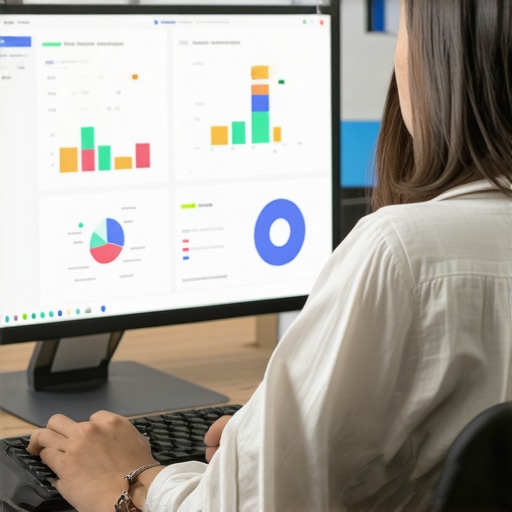
To further boost your long-term success, consider investing in a dedicated dashboard that consolidates all your data sources into one intuitive interface. This not only saves time but also enhances decision-making accuracy, giving you a strategic edge in competitive local markets. Remember, consistent maintenance now ensures your tools remain valuable assets as your business grows—so prioritize routine checks and stay updated on the latest software features.
The Hardest Lesson I Learned About Maps Analytics and Ranking Trackers
One of the most impactful insights I gained was realizing that even the most popular tools can mislead you if not properly validated. I once trusted a widely used ranking tracker without periodic checks, only to find its data was inconsistent, leading me down costly wrong strategies. That wake-up call taught me the importance of cross-verifying data with actual customer interactions and other analytics sources. This lesson highlighted that reliance on a single tool without ongoing validation can obscure real performance and hinder growth.
Why Constant Vigilance Outperforms Set-It-And-Forget-It Approaches
I used to assume that setting my maps analytics and GMB reports once was enough. But as search behaviors evolved, I saw firsthand how static configurations could quickly become outdated, causing skewed insights. Regular audits, updates, and calibration of dashboard filters became essential. Embracing a disciplined approach to continuous monitoring allowed me to catch anomalies early and adapt strategies, transforming my local SEO efforts from reactive to proactive.
Seeing Data in Context Opens New Opportunities
Early on, I was impressed by a sudden ranking boost, only to realize conversions hadn’t increased. This disconnect revealed that high rankings alone don’t guarantee results. By integrating KPIs like call volume and foot traffic into my dashboard, I gained a fuller picture of my performance. This approach shifted my focus from vanity metrics to meaningful business outcomes, guiding better decisions and resource allocation.
Invest in Tools That Grow with Your Strategy
Over time, I found that quality tools capable of customization and seamless updates made a tangible difference. I swear by platforms that offer flexible tracking parameters and comprehensive analytics, such as a trusted ranking tracker and maps analytics tools. These investments ensure my data remains accurate amidst evolving search landscapes, enabling strategic agility and confidence in my local SEO roadmap.
Stay Curious and Never Stop Testing
The greatest lesson I learned is that innovation in tools and strategies is ongoing. Regularly testing new settings, exploring features, and seeking insights keeps you ahead of competitors. I challenge myself to revisit and refine my dashboards and reports monthly, turning data validation into a habit. This mindset fueled my growth, making me more adaptable and resilient in the rapidly changing world of local search.
My Favorite Resources for Growing Your Local SEO Expertise
To deepen my understanding, I turn to reputable sources like comprehensive dashboards that consolidate key metrics, the latest guides on ranking errors, and specialized blogs about maps analytics. These tools and insights empower me to optimize continuously and confidently, knowing I’m leveraging proven strategies and staying ahead in local SEO performance.
Embrace the Future and Keep Moving Forward
Remember, mastering maps analytics, GMB reports, ranking trackers, and KPI dashboards isn’t a one-time achievement—it’s an ongoing journey. As the landscape evolves with AI and smarter algorithms, your ability to adapt and refine your tools becomes your greatest asset. Stay curious, keep testing, and commit to disciplined validation. With consistent effort, you will unlock new levels of local search success and turn data into your most powerful competitive advantage.
What’s the biggest challenge you’ve faced in maintaining your local SEO tracking tools? Share your experiences below, and let’s learn from each other’s journeys!
,


This post really hit the mark on the importance of validating and regularly auditing local SEO tools. I’ve learned that even the most popular software can give misleading data if not properly set up or cross-checked — especially as search algorithms become more advanced with AI. I’ve faced a similar situation where my GMB insights didn’t match my actual conversion metrics, which was a wake-up call to double-check my setup and data sources. I think one often overlooked aspect is how geography and device type can skew data; I’ve found that customizing tracking settings for specific locations and platforms significantly improves accuracy. Has anyone found effective ways to automate these regular audits or validation processes, so they don’t become a burden? I’m curious about tools or workflows others have developed that help keep data trustworthy without requiring constant manual oversight. Ensuring data integrity is vital for making confident decisions and avoiding chasing shadows in SEO efforts.