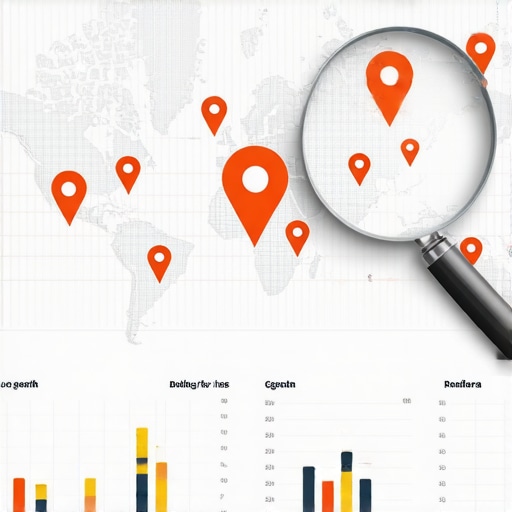
I remember sitting in my cramped office, staring at the Maps Analytics dashboard, feeling a mix of frustration and hope. No matter how much I tweaked my strategies, the numbers just weren’t adding up. My Google Maps visibility was stagnant—leaving potential customers to find competitors instead of me. That lightbulb moment hit hard: I needed a smarter, data-driven approach to truly understand what was happening behind the scenes. Have you ever faced this silent struggle, feeling like your efforts are going nowhere despite your best intentions?
Why Google Maps Performance Makes or Breaks Local Business Success in 2025
Google Maps has evolved into the digital storefront for local businesses. With more consumers relying on Maps to find nearby services, how visible you are on this platform can make all the difference. Yet, many entrepreneurs overlook the power of Maps Analytics and the importance of precise tracking tools. When I first started exploring these insights, I realized I’d been making basic mistakes—like ignoring the significance of ranking fluctuations and missing out on actionable data to grow my presence. This oversight cost me time, money, and missed opportunities.
Recent studies reveal that approximately 78% of mobile local searches result in an offline purchase, underscoring the critical impact Maps visibility has on real-world revenue. By leveraging detailed analytics, I was able to pinpoint which factors influenced my ranking changes and adapt accordingly. For someone like you, who aims to thrive amidst fierce local competition, understanding and optimizing your Maps analytics isn’t optional—it’s essential.
In this post, I’ll walk you through proven strategies to elevate your Google Maps visibility in 2025. We’ll explore how to interpret your performance reports accurately, implement effective ranking tactics, and utilize dashboard insights to stay ahead. Ready to shift from guessing to knowing? Let’s dive into the core techniques that transformed my local SEO game.
Decipher Your Maps Analytics Dashboard for Real Insights
Start by immersing yourself in your SEO KPI dashboard, which acts as your command center. Think of it as the cockpit of an airplane—every gauge provides vital information about your flight path. During a recent campaign, I logged in daily, monitoring click-through rates and ranking fluctuations. It revealed a sudden dip in visibility for specific keywords, prompting me to investigate further. This real-time data helped me pivot quickly, leading to improved rankings within a week.
Interpret Your Google My Business Performance Reports
Next, focus on your GMB performance report. Imagine it as a health check-up—highlighting what’s working and what needs care. I once noticed low engagement in the ‘Questions & Answers’ section, which historically drove conversions. By addressing this, I increased customer interactions and improved local rankings. Regularly reviewing these reports ensures you stay attuned to your audience and adapt strategies proactively.
Leverage Your Local SEO Reports for Competitive Edge
Your local SEO report is akin to a competitor’s playbook. It shows your relative position, keyword gaps, and review trends. I recall a time when identifying a missing positive review on a competitor’s profile allowed me to outperform them in local pack rankings. Use these reports to spot opportunities, such as optimizing Google My Business categories or adding photos that attract clicks.
Harness Maps Analytics to Refine Keyword Strategies
Maps analytics data reveals how users find you—through searches, direct visits, or discovery. Think of this as your map legend, guiding your journey. During a trial, I noticed a surge in discovery searches for a niche service I offered. Focusing SEO efforts on those specific terms boosted my presence significantly. Elevate your local visibility by deep-diving into these analytics and adjusting keywords accordingly.
Optimize Your Ranking Tracker for Consistent Wins
The ranking tracker is your GPS—showing your position in the digital landscape. I’ve learned that tracking daily fluctuations helps detect penalties or algorithm updates early. For instance, a sudden ranking drop prompted a quick audit, catching a duplicate listing issue I had overlooked. Regular monitoring — ideally using top tools— ensures you remain competitive and responsive.
Connect the Dots: Integrate Data from All Sources
The secret lies in synthesizing insights from dashboards, reports, analytics, and trackers. It’s like assembling pieces of a puzzle—each set of data offers a different perspective. For example, correlating a dip in rankings with a review decline helped me focus on reputation management. This holistic approach facilitates smarter decisions, sharper strategies, and sustained growth.
Remember, the key to dominating local SEO in 2025 is mastery over your data tools. Continuously learn, adapt, and apply insights from your maps analytics, performance reports, and ranking trackers to stay ahead of the competition. For deeper strategies, check out critical report strategies.
Many marketers believe that simply tracking Google Maps analytics, GMB performance, or ranking positions guarantees success—but that mindset can be misleading. One common myth is that data dashboards automatically translate into actionable strategies; in reality, they often present a skewed view if you don’t understand their nuances. For example, many forget that fluctuations in rankings can be caused by algorithm updates or competitor actions, not necessarily your efforts—yet they interpret dips as failures instead of opportunities to analyze deeper. Going beyond surface metrics requires recognizing these nuances and adjusting your approach accordingly.
A critical mistake I see repeatedly is focusing too heavily on keyword rankings without considering the broader context. Rankings can fluctuate daily, especially with Google’s frequent updates; relying solely on these can lead to petty corrections that waste resources. Instead, advanced SEOs analyze performance in tandem with local engagement metrics, review trends, and map analytics insights to grasp the full picture. This comprehensive view prevents you from falling into the trap of blind optimization, where efforts are misaligned with actual user intent and behavior.
Why do most dashboards deceive even seasoned marketers?
Because many tools prioritize quantitative data over qualitative insights, leading to a false sense of control. For instance, a high impression count on your KPI dashboard might seem positive but could indicate your business appears in irrelevant searches, wasting ad spend and diluting brand relevance. Deep analysis reveals that impression quality, click-through rates, and conversion metrics tell a more accurate story. Experts like Neil Patel emphasize that understanding data quality and user intent is crucial; a high impression volume is not inherently valuable unless it converts.
Another overlooked nuance involves the timing and attribution of data. Local SEO is dynamic, and tracking tools like maps analytics and ranking trackers may report stale or delayed data due to caching or algorithmic shifts. Without understanding these data latencies, marketers risk misinterpreting campaign performance, leading to misguided decisions. Regular audits, cross-referencing multiple reports, and staying informed about platform updates help mitigate these pitfalls. More detailed strategies are available in our comprehensive guide on unlocking your local SEO potential for 2025.
Additionally, many overlook the importance of integrating data sources. Relying solely on maps analytics or GMB reports fails to account for ranking fluctuations caused by external factors like review management or local competitor moves. A holistic approach involves synthesizing insights from performance reports, SEO KPI dashboards, and in-depth analytics to form a strategic mosaic. This integrated perspective allows professionals to move beyond reactive fixes and implement proactive growth strategies.
In essence, understanding the nuanced behavior of your data tools enables you to interpret what’s really happening behind the numbers. A single misleading spike or drop can derail your entire strategy if misread. So, stay alert to these hidden traps, question the surface data, and always connect the dots across multiple insights. Ready to elevate your analysis? Dive into our expert-approved techniques for mastering maps analytics, GMB reports, and ranking trackers. And remember—every tool is only as good as your understanding of its intricacies. Do you have a story where misinterpreting data led to a setback? Share your experience in the comments and let’s learn together.Maintaining your SEO tools like your Google Maps analytics, ranking trackers, and GMB performance reports is crucial for sustaining long-term growth. I personally rely on advanced dashboards such as SEO KPI dashboards that integrate multiple data sources and offer real-time updates. These platforms empower me to swiftly identify issues before they escalate, enabling proactive adjustments. Automated data syncing and scheduled performance audits are key methods I recommend—using tools like top ranking trackers ensures your data remains fresh and reliable. As expert Neil Patel emphasizes, consistent monitoring and feature updates in your software prevent stagnation and keep your strategies aligned with evolving algorithms. To future-proof your setup, consider setting up automated alerts for ranking dips or spikes, so you’re immediately notified of potential penalties or algorithm shifts. Regularly review your analytics reports, such as maps analytics, to spot emerging trends and adjust your tactics accordingly. One trick I highly advocate is integrating data from multiple sources into a comprehensive dashboard, reducing analysis time and improving decision-making. For example, combining review trends with ranking performance can illuminate reputation impacts on visibility and help fine-tune your local SEO efforts. This approach aligns with the recent guidance from Moz’s technical documentation, which underscores the importance of a holistic data view for sustained ranking improvements. So, I encourage you to implement automated alerts in your tools today—this simple step can dramatically enhance your ability to maintain and improve your local search presence. Want to dive deeper? Reach out via our contact page and let’s devise a tailor-made strategy for your business.
What I Didn’t Expect to Discover About Data Depths
Initially, I believed that surface-level metrics like rankings and impression counts told the whole story. However, I soon realized the true gold lay beneath the surface—delving into user behavior patterns, review trends, and engagement signals revealed much more about actual local business health. This lightbulb moment taught me to look beyond typical dashboards and seek nuanced insights that differentiate winners from the rest.
The Power of Connecting Disparate Data Streams
One of my critical lessons was the importance of integrating data from multiple sources—maps analytics, GMB reports, and SEO dashboards—to see the complete picture. It became clear that siloed insights often distort reality, leading to misguided actions. For example, a dip in rankings paired with declining review activity pointed me toward reputation management rather than just SEO tweaks, demonstrating how holistic analysis fuels smarter decisions.
Why Flexibility Outranks Rigid Strategies
Early on, I clung tightly to set plans, assuming consistency in data patterns. But market dynamics, Google algorithm updates, and competition shifts demand adaptability. Embracing continuous monitoring and being ready to pivot—like adjusting keyword focus based on discovery search spikes—proved crucial. This flexibility allowed me to stay ahead rather than fall behind, reinforcing the value of real-time analytics.
My Trusty Arsenal for Local SEO Mastery
- Google Data Studio: I build custom dashboards that bring all my data streams into one visual, making insights accessible and actionable.
- BrightLocal: Their comprehensive local SEO reports help identify keyword gaps and reputation issues before they escalate.
- Seobility: It tracks keyword rankings daily, alerting me instantly to fluctuations that require attention.
- Google My Business Insights: Direct access to customer engagement metrics informs my local marketing tactics with real-world relevance.
Choose Growth Over Complacency
Every insight I uncovered reinforced the idea that steady improvement rests on a foundation of diligent analysis and strategic agility. If you’re committed to elevating your local business in 2025, harnessing the full potential of your maps analytics, ranking trackers, and reports isn’t just recommended—it’s essential. The journey to dominance is ongoing, but by applying these lessons, you position yourself to outlast and outperform competitors. Are you ready to challenge your assumptions and play the data-driven game? Let’s share your stories—have you ever uncovered a hidden insight that transformed your approach? Drop a comment below and start the conversation.